

What if I told you that Spain has a restaurant serving food since 1725, a festival where thousands of people throw tomatoes, and a New Year’s Eve tradition involving 12 grapes? These are just a few of the surprises hidden within this fascinating country. Beyond its sunny beaches and famous landmarks, Spain is filled with extraordinary history, unusual customs, and cultural treasures.
Get ready to discover 30 interesting facts about Spain that might completely change the way you see this European destination!
Quick Facts About Spain
Before exploring its fascinating details, here’s a quick overview of the country’s geography, government, language, and culture.
| Category | Information |
| Official name | Kingdom of Spain |
| Capital city | Madrid |
| Continent | Europe |
| Currency | Euro (€) |
| Government | Parliamentary constitutional monarchy |
| National official language | Spanish (Castilian) |
| Autonomous communities | 17 |
| Autonomous cities | Ceuta and Melilla |
| Highest point | Mount Teide |
| Highest mountain elevation | 3,718 metres |
| Famous traditional dish | Paella |
| Famous dance | Flamenco |
| National anthem | Marcha Real |
Geography and Natural Wonders
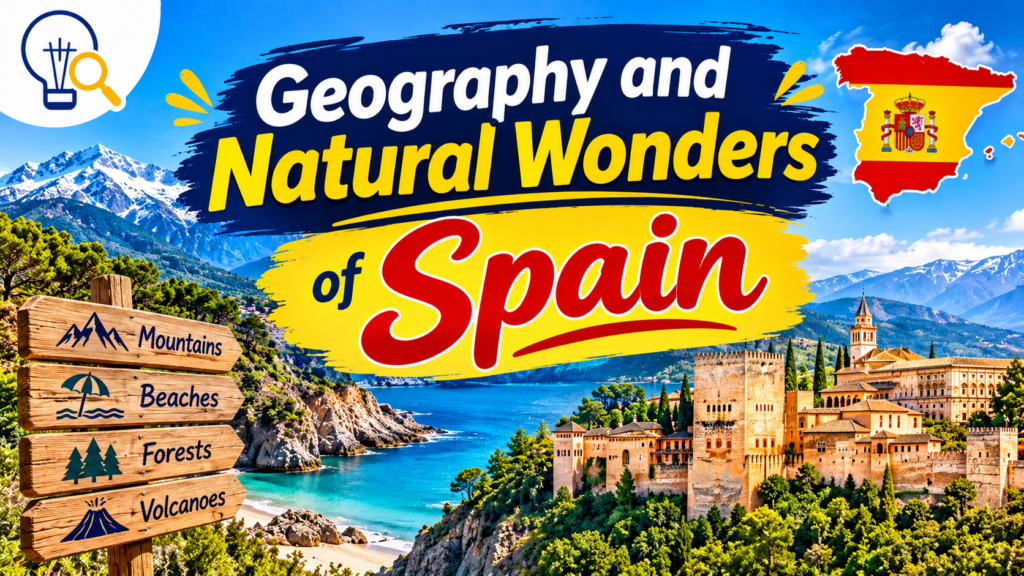
The country’s landscape is far more diverse than many people imagine. Although it is famous for sunny beaches and Mediterranean resorts, it also has dramatic mountain ranges, volcanic islands, green forests, and surprisingly dry regions.
From the Atlantic coast to the Mediterranean Sea, this geographical variety creates countless opportunities for outdoor adventures, sightseeing, and nature exploration.
Spain Has More Than 8,000 Kilometres of Coastline
One of the most fascinating geographical facts is its extensive coastline, stretching for approximately 8,000 kilometres when islands and coastal territories are included. The shores offer everything from golden Mediterranean beaches to rugged Atlantic landscapes, making the country a popular destination for beach lovers and outdoor enthusiasts.
Mount Teide Is the Country’s Highest Point
Located on Tenerife in the Canary Islands, Mount Teide rises approximately 3,718 metres above sea level. This impressive volcano is also the highest point in the country and stands within Teide National Park. Its extraordinary volcanic landscape attracts hikers, photographers, and nature enthusiasts throughout the year.
There Are 17 Autonomous Communities
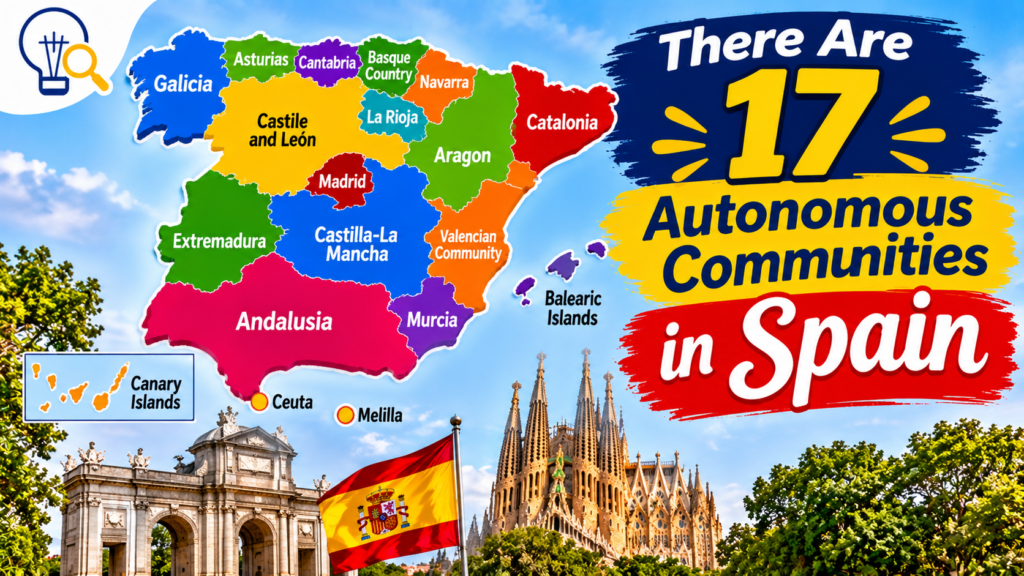
The country is divided into 17 autonomous communities and two autonomous cities, Ceuta and Melilla. Each region has its own traditions, cuisine, landscapes, and cultural identity. For example, Catalonia has a distinctive language and heritage, while Andalusia is famous for flamenco and historic Moorish architecture.
The Canary Islands Are Located in the Atlantic Ocean
Although the Canary Islands belong to the country, they are situated in the Atlantic Ocean off the northwestern coast of Africa. This volcanic archipelago includes eight main islands, including La Graciosa, each offering distinctive scenery. Visitors can explore black-sand beaches, lush forests, volcanic craters, and warm coastal towns.
The Country Has an Extraordinary Variety of Landscapes
It is one of Europe’s most geographically diverse nations. Its scenery includes the snow-covered Pyrenees, the semi-arid landscapes of Almería, the green mountains of Asturias, and the Mediterranean coastline. This remarkable variety allows visitors to enjoy skiing, hiking, swimming, and exploring different natural environments in one destination.
History and Cultural Heritage
The country’s history has been shaped by several civilisations, including the Romans, Visigoths, and Moors. Their influence remains visible in its monuments, languages, architecture, and traditions, making the region fascinating for anyone interested in the past.
Historical landmarks scattered across the country reveal how different cultures contributed to its identity over many centuries.
It Has 50 UNESCO World Heritage Sites
The country has 50 properties on UNESCO‘s World Heritage List, including historic cities, ancient monuments, and natural landscapes. Famous examples include the Alhambra in Granada, the historic centre of Córdoba, and the works of Antoni Gaudí in Barcelona. These landmarks reflect an extraordinary cultural heritage.
Spanish Is Spoken by Hundreds of Millions of People
Spanish, also known as Castilian, is spoken by more than 630 million people worldwide when native speakers, people with limited proficiency, and language learners are included. It is an official language in this country and many nations across Latin America, making it one of the world’s most widely used languages.
There Are Several Co-Official Regional Languages
Spanish is not the only language spoken here. Catalan, Galician, Basque, and Valencian also have official or co-official status in their respective regions. These languages reflect diverse cultural identities and are used in education, public services, media, and everyday conversations.
The Romans Once Ruled Much of the Iberian Peninsula
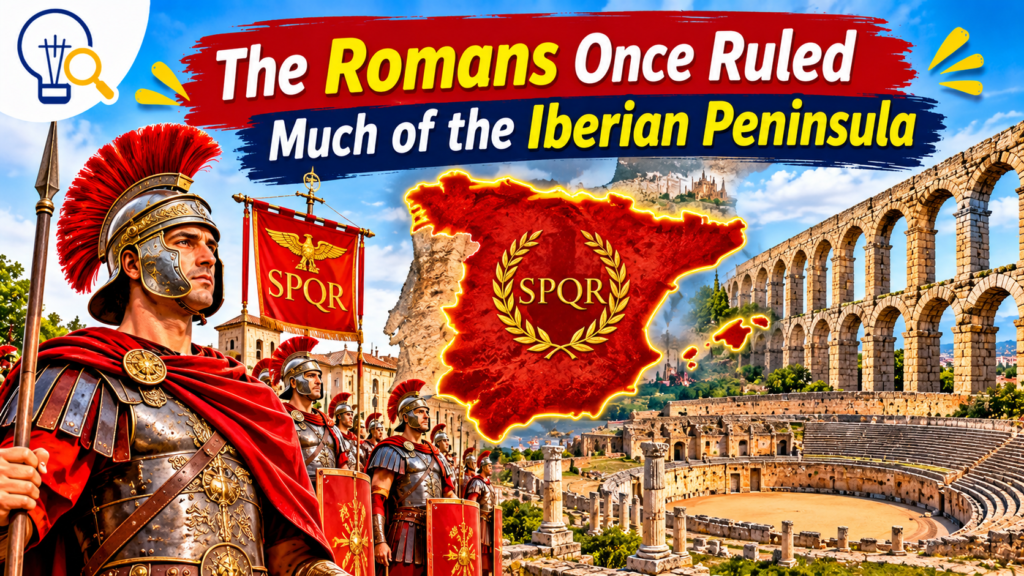
The Roman conquest of the Iberian Peninsula began in 218 BC. Over time, Roman influence transformed the region through roads, cities, laws, and architecture. Remains of this civilisation can still be explored today, including the impressive Roman theatre in Mérida and the aqueduct in Segovia.
The Alhambra Reflects Moorish Heritage
The Alhambra in Granada is one of the region’s most celebrated historical landmarks. This magnificent palace and fortress complex features intricate geometric decorations, elegant courtyards, carved arches, and beautiful gardens. Its architecture reflects the artistic and architectural achievements of the Nasrid dynasty.
Spanish Food and Traditional Drinks
Food is an essential part of Spanish culture, and every region has its own distinctive specialities. From seafood dishes and rice-based meals to small shared plates and traditional desserts, the cuisine offers plenty of delicious surprises.
Many traditional recipes use fresh vegetables, olive oil, seafood, rice, and locally produced ingredients.
Paella Originally Comes From Valencia
Paella is one of the country’s most recognisable dishes, but its roots lie in the Valencia region. Traditional Valencian paella commonly includes rice, rabbit, chicken, green beans, and saffron. Seafood versions are also popular, although recipes vary considerably between regions and families.
Tapas Are Small Portions of Food
Tapas are small dishes served in Spanish bars and restaurants, often enjoyed alongside drinks. They can include olives, cheese, potatoes, seafood, and cured meats. Rather than ordering one large meal, people frequently share several plates, turning an ordinary meal into a relaxed social experience.
The Country Is Famous for Its Olive Oil
It is one of the world’s leading producers of olive oil. Its warm climate and extensive olive groves support a long-standing agricultural tradition, particularly in Andalusia. This widely used ingredient appears in cooking, salad dressings, and traditional Mediterranean dishes.
Churros Are a Popular Spanish Treat
Churros are fried dough pastries commonly enjoyed for breakfast or as a snack. They are often served with thick hot chocolate for dipping. Their crispy exterior and soft interior make them a favourite at traditional cafés and churrerías throughout the country.
Gazpacho Is a Cold Spanish Soup
Unlike many traditional soups, gazpacho is served cold. This refreshing Andalusian speciality is usually prepared with tomatoes, cucumbers, peppers, garlic, olive oil, and bread. It is particularly popular during hot summer months when people want something light and refreshing.
Famous Spanish Foods and Drinks
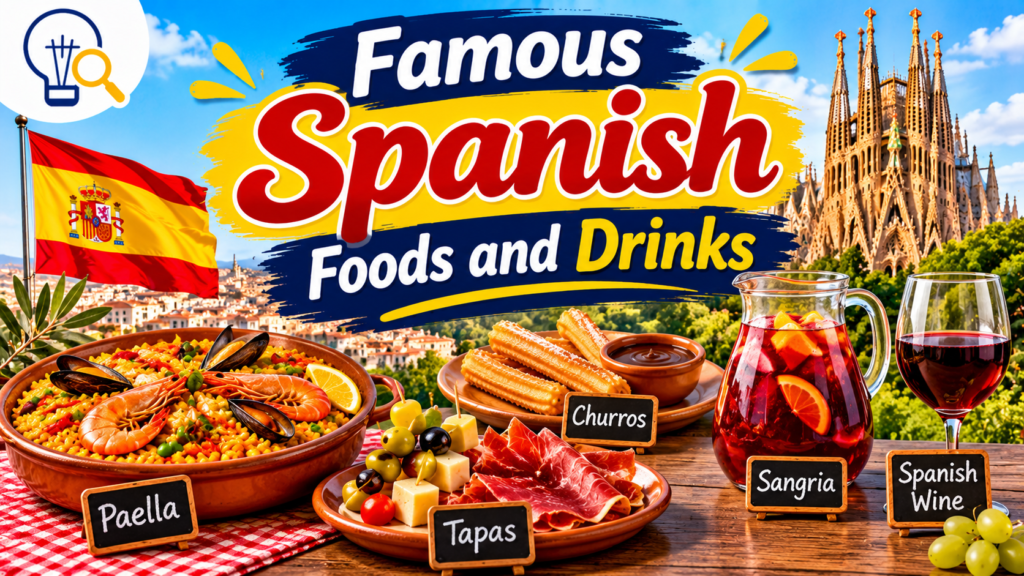
The cuisine includes many regional specialities. Here are some popular examples worth knowing.
| Food or drink | Description | Regional association |
| Paella | Traditional rice dish | Valencia |
| Gazpacho | Cold vegetable soup | Andalusia |
| Churros | Fried dough pastry | Spain |
| Tortilla Española | Spanish potato omelette | Spain |
| Patatas Bravas | Fried potatoes with spicy sauce | Spain |
| Jamón Ibérico | Traditional cured ham | Iberian Peninsula |
| Sangria | Fruit-based wine drink | Spain |
Festivals and Unique Traditions
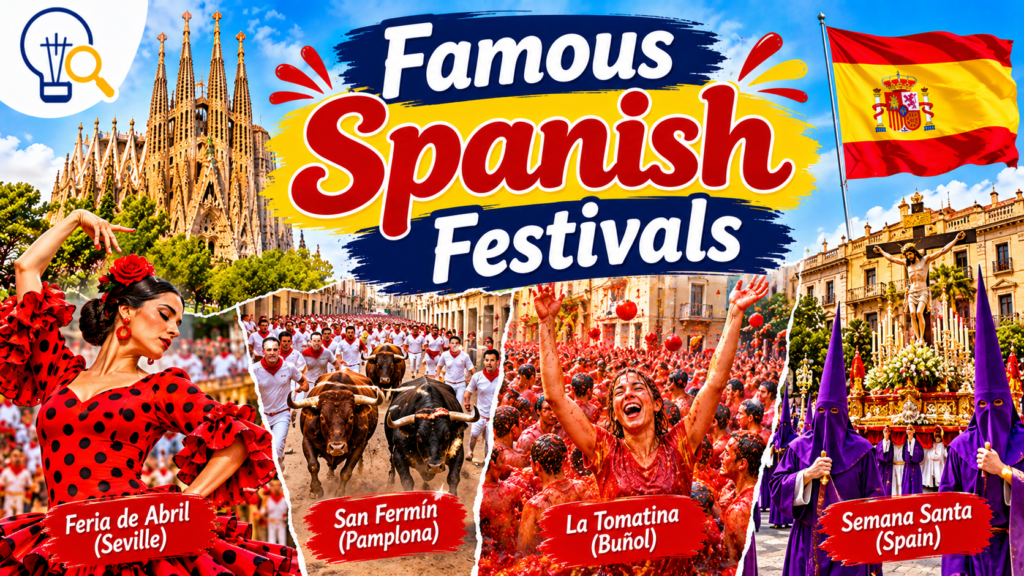
Spanish celebrations are famous for their energy, colour, and distinctive local customs. Throughout the year, towns and cities organise festivals that bring communities together through music, dancing, food, and unusual activities.
Some celebrations are rooted in religious history, while others have developed into entertaining public events that attract international visitors.
La Tomatina Is a Festival of Tomato Fights
Every year, the town of Buñol hosts La Tomatina, a festival in which participants throw ripe tomatoes at one another in a giant food fight. What began as a local tradition has become an internationally recognised event, attracting visitors who want to experience this unusual celebration.
People Celebrate New Year’s Eve With 12 Grapes
Eating 12 grapes at midnight on New Year’s Eve is a popular Spanish tradition. People try to eat one grape with each of the clock’s 12 chimes, with each grape symbolising good fortune for a month of the coming year. It is a fun way to welcome a fresh start.
Flamenco Is More Than Just a Dance
Flamenco is an expressive art form associated especially with Andalusia. It combines singing, guitar music, rhythmic handclapping, and passionate dancing. Recognised by UNESCO as intangible cultural heritage, this art form reflects a rich tradition that continues to influence performers around the world.
Las Fallas Turns Valencia Into a Giant Outdoor Exhibition
Valencia’s famous Las Fallas festival features enormous artistic sculptures known as fallas. These elaborate creations often depict humorous or satirical scenes. At the end of the celebration, many of the sculptures are burned in spectacular public bonfires, creating a dramatic conclusion to the festivities.
San Fermín Is Famous for Its Running of the Bulls
Held every July in Pamplona, San Fermín is a traditional festival best known internationally for its running of the bulls. Participants run through designated streets ahead of bulls moving toward the bullring. The celebration also includes music, parades, religious ceremonies, and public gatherings.
Famous Spanish Festivals
The country hosts numerous celebrations throughout the year. Each event offers a different glimpse into its regional traditions.
| Festival | Location | What makes it special |
| La Tomatina | Buñol | Giant tomato fight |
| Las Fallas | Valencia | Huge sculptures and bonfires |
| San Fermín | Pamplona | Famous running of the bulls |
| Feria de Abril | Seville | Traditional dancing, music, and celebrations |
| Semana Santa | Various cities | Religious processions |
Cities, Architecture, and Famous Landmarks
Cities across the country are filled with extraordinary buildings, historic neighbourhoods, and architectural masterpieces. From modernist creations to Roman engineering, these landmarks reveal how different periods and artistic movements have shaped its identity.
Whether you explore the lively streets of Madrid or the historic attractions of Barcelona, there is always something remarkable to discover.
Barcelona Is Home to the Famous Sagrada Família
The Sagrada Família is an extraordinary basilica designed by Catalan architect Antoni Gaudí. Construction began in 1882, and the building is famous for its elaborate façades, towering structures, and nature-inspired details. It remains one of Barcelona’s most recognisable attractions.
Madrid Is the Capital
Madrid is the capital and largest city. It is known for its grand boulevards, historic squares, impressive museums, and lively food culture. Popular attractions include the Royal Palace, Plaza Mayor, and the Prado Museum, which houses an exceptional collection of European art.
The Roman Aqueduct of Segovia Was Built Without Mortar
Segovia is home to an extraordinary Roman aqueduct constructed using carefully fitted granite blocks. Remarkably, its historic structure was built without mortar holding the stones together. The monument demonstrates the engineering skill of Roman builders and remains one of the region’s most impressive ancient landmarks.
The Tower of Hercules Is the World’s Oldest Working Roman Lighthouse
Located in A Coruña, the Tower of Hercules is an ancient Roman lighthouse that dates back to the 1st century AD. Remarkably, it is still in use today. This UNESCO World Heritage Site has guided ships along Spain’s Atlantic coast for centuries and remains one of the country’s most impressive historical landmarks.
The Guggenheim Museum Has a Distinctive Titanium Exterior
Located in Bilbao, the Guggenheim Museum is famous for its unusual modern architecture and shimmering titanium exterior. Designed by architect Frank Gehry, the building opened in 1997. Its striking appearance helped transform the city into an internationally recognised destination for art and architecture.
Surprising Facts About Everyday Life
Beyond famous attractions and historical landmarks, everyday life has plenty of interesting details. From unusual national traditions to distinctive social habits, these final facts reveal another side of the country.
Local customs are often connected to family, community, celebrations, and a strong appreciation for cultural heritage.
The National Anthem Has No Official Lyrics
The national anthem, known as the Marcha Real, is unusual because it has no officially adopted lyrics. It is one of the few national anthems in the world that is traditionally performed as an instrumental piece. Its distinctive melody is often heard during important national events and sporting occasions.
The Christmas Lottery Is Enormously Popular
The Christmas lottery, known as El Gordo, is one of the country’s most celebrated annual traditions. The major draw takes place on December 22, and schoolchildren traditionally sing out the winning numbers and prizes. Families, friends, and colleagues often buy tickets together.
The Camino de Santiago Attracts Pilgrims From Around the World
The Camino de Santiago is a network of historic pilgrimage routes leading to Santiago de Compostela in northwestern Spain. People walk or cycle these paths for religious, cultural, and personal reasons. Along the way, they experience historic villages, beautiful countryside, and centuries-old traditions.
Football Has a Strong Place in Everyday Culture
Football is deeply woven into Spanish sporting culture. Clubs such as Real Madrid and FC Barcelona have supporters across the globe, while the national team has achieved major international success. Match days often bring communities together, making the sport an important part of social life.
The Country Is Home to the World’s Oldest Restaurant Recognised by Guinness World Records
Sobrino de Botín, a restaurant in Madrid, traces its history back to 1725 and is recognised by Guinness World Records as the world’s oldest restaurant. It is particularly famous for its traditional roast suckling pig and centuries-old dining atmosphere.
Frequently Asked Questions About Spain
Here are answers to some common questions about the country’s culture, food, geography, and traditions.
What Is Spain Most Famous For?
The country is famous for its beautiful beaches, historic architecture, delicious cuisine, football culture, and lively festivals. Attractions such as the Sagrada Família, Alhambra, and Plaza Mayor attract visitors from around the world.
What Are Three Interesting Facts About Spain?
Three fascinating facts are that the country has 17 autonomous communities, its national anthem has no official lyrics, and its New Year’s Eve tradition involves eating 12 grapes at midnight for good luck.
What Is Spain’s National Food?
There is no officially designated national dish. However, paella is widely recognised internationally as a traditional Spanish food, particularly associated with Valencia.
What Language Do People Speak in Spain?
Spanish, also called Castilian, is the country’s national official language. Catalan, Galician, Basque, and Valencian also have official or co-official status in their respective regions.
Why Is Spain Famous for Festivals?
The country has a strong tradition of community celebrations, religious events, music, and cultural festivals. Events such as La Tomatina, Las Fallas, and San Fermín attract visitors who want to experience its lively traditions.
What Is the Most Famous City in Spain?
Madrid and Barcelona are among the country’s best-known cities. Madrid is the capital and a major cultural centre, while Barcelona is famous for Gaudí’s architecture, the Sagrada Família, and its Mediterranean atmosphere.
Is Spain a Good Country for Tourists?
Yes. It offers historic attractions, beautiful coastlines, diverse landscapes, excellent food, and lively cultural experiences. Its different regions also provide plenty of opportunities for sightseeing, outdoor activities, and relaxation.
What Is Spain’s Highest Mountain?
Mount Teide, located on Tenerife in the Canary Islands, is the highest mountain in the country. It rises approximately 3,718 metres above sea level and is surrounded by a remarkable volcanic landscape.
Final Thoughts
Spain is much more than a destination known for sunny beaches, football, and delicious food. Its fascinating history, diverse regional cultures, remarkable architecture, and unusual traditions make it one of Europe’s most interesting countries. From the extraordinary beauty of Mount Teide to the excitement of La Tomatina, every part of the country offers something worth discovering.
These 30 interesting facts reveal just how much there is to learn about its people, heritage, and everyday life. Whether you are planning a future visit or simply exploring the world from home, this destination has plenty of surprises waiting to be discovered.
