

Fossils are more than just old bones hidden inside rocks. They are remarkable clues that reveal how life existed millions of years ago. From enormous dinosaurs and ancient sea creatures to tiny insects trapped in amber, these natural discoveries help us understand a world that existed long before humans appeared.
Some fossils preserve footprints, while others reveal the shapes of leaves, feathers, and even ancient animal waste. Scientists study these discoveries to learn about evolution, extinct species, changing environments, and Earth’s distant past.
In this article, you’ll discover 50 interesting facts about fossils, including how they form, where they are found, and what surprising secrets they reveal about prehistoric life.
Quick Facts About Fossils
| Feature | Details |
|---|---|
| Meaning | Preserved remains or traces of ancient life |
| Main types | Body fossils and trace fossils |
| Common locations | Sedimentary rocks |
| Famous examples | Dinosaur bones, ammonites, trilobites |
| Fossilization | Mineral replacement, impressions, or preservation in amber |
| Scientific study | Paleontology |
| Scientists | Paleontologists |
| Importance | Understanding ancient life, evolution, and environments |
How Fossils Form
Fossil Formation Takes Time
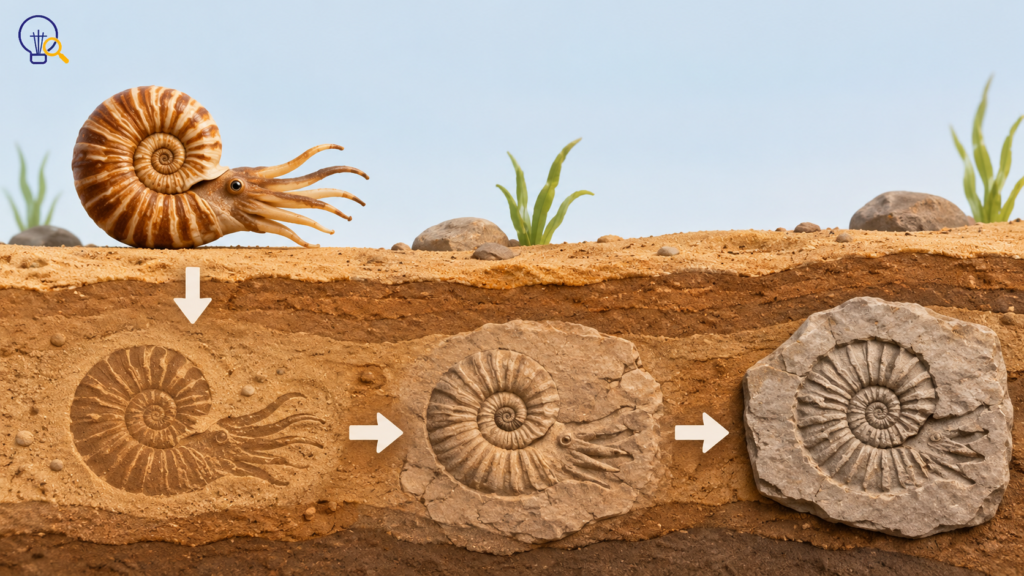
Many fossils develop through processes that take thousands or millions of years. After an organism dies, its remains may become buried under mud, sand, or other sediments. Over time, minerals can enter the remains and help preserve their structure.
Rapid Burial Protects Remains
One important condition for fossil formation is rapid burial. When an animal or plant becomes covered by sediment soon after death, its remains have a better chance of escaping scavengers, weathering, and complete decomposition.
Most Organisms Never Become Fossils
Fossilization is surprisingly rare. Most dead organisms decompose before their remains can be preserved. Animals with durable structures, such as bones, teeth, and shells, have a better chance of entering the fossil record than organisms with only soft tissues.
Minerals Replace Body Materials
During fossilization, mineral-rich groundwater can enter buried bones, wood, or shells. Minerals may fill tiny spaces or gradually replace original materials. This process helps preserve the shape and internal structure of ancient organisms.
Sedimentary Rocks Preserve Fossils
Sedimentary rocks form when layers of materials such as sand, mud, and silt accumulate and eventually harden. These environments can bury organisms and protect their remains. That is why fossils are commonly discovered in limestone, shale, and sandstone.
Soft Tissues Can Survive
Although bones and shells are more commonly fossilized, soft tissues can survive under special conditions. Scientists have discovered fossils containing impressions of skin, feathers, and other delicate structures.
Not All Fossils Turn to Stone
Not every fossil is a mineralized bone or shell. Some ancient remains survive through freezing, drying, or preservation in natural substances such as amber. These unusual conditions can protect parts of organisms that would normally decay.
Erosion Reveals Hidden Fossils
Fossils often remain buried under layers of rock for extremely long periods. Wind, rain, rivers, and other natural processes gradually wear away exposed rock. This erosion can reveal fossils that were once hidden underground.
Taphonomy Explains Fossil Preservation
Taphonomy is the scientific study of what happens to an organism between its death and its discovery as a fossil. It helps researchers understand how remains were buried, changed, damaged, or preserved over time.
Fossils Form in Different Ways
Different organisms become preserved in different ways. Some leave mineralized bones, while others create impressions, natural molds, or casts. The surrounding environment plays a major role in determining what kind of fossil eventually forms.
Types of Fossils
Body Fossils Preserve Ancient Organisms
Body fossils are physical remains of once-living organisms. They include bones, teeth, shells, leaves, wood, and other body structures. These discoveries help scientists examine the physical characteristics of extinct species.
Footprints Are Fossils Too
A fossil does not have to contain bones or body parts. Ancient footprints preserved in sediment are known as trace fossils. They provide evidence of where animals walked and sometimes reveal how they moved.
Coprolites Preserve Ancient Waste
Coprolites are fossilized animal feces. Although they may not look impressive, they can reveal important details about ancient diets. Scientists examine them to identify possible food remains, such as bones, plants, and other organic material.
Amber Traps Ancient Insects
Amber is fossilized tree resin that can trap small organisms. Insects, spiders, and pieces of plant material have been discovered inside it. Some specimens preserve remarkably fine details of organisms that lived millions of years ago.
Petrified Wood Preserves Trees
Petrified wood forms when minerals enter buried wood and preserve its structure. In many cases, the original organic material is gradually replaced by minerals. Some specimens even retain visible growth rings.
Mold Fossils Leave Natural Impressions
A mold fossil forms when an organism leaves an impression in sediment and its original remains later disappear. The empty space preserves the shape of the organism, creating a natural record of its structure.
Cast Fossils Create Three-Dimensional Copies
A cast fossil can form when minerals or sediment fill an existing mold. Once the material hardens, it creates a three-dimensional copy of the original organism’s shape.
Trace Fossils Record Ancient Activities
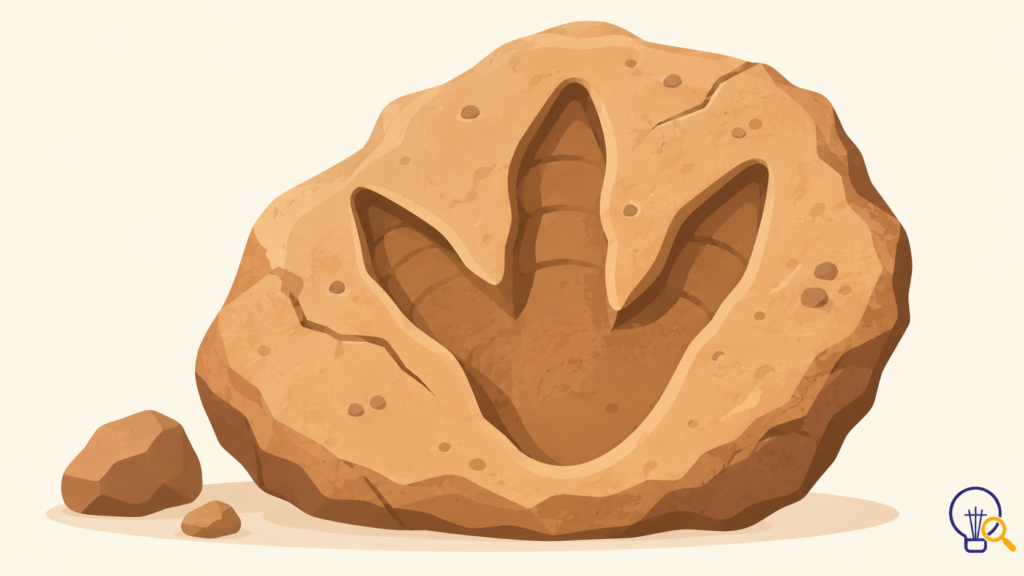
Trace fossils preserve evidence of what organisms did rather than their actual body parts. Footprints, burrows, feeding marks, and trails are common examples. They help scientists reconstruct the behavior of prehistoric animals.
Microfossils Are Extremely Small
Not all fossils are large enough to see easily. Microfossils are tiny remains of ancient organisms that often require a microscope for examination. They are useful for studying past environments and changes in Earth’s history.
Some Fossils Preserve Entire Organisms
Under exceptional conditions, an organism may be preserved with much of its original body intact. Freezing, drying, and entrapment in amber can protect delicate structures that are normally lost during fossilization.
Prehistoric Animals
Dinosaurs Left More Than Bones
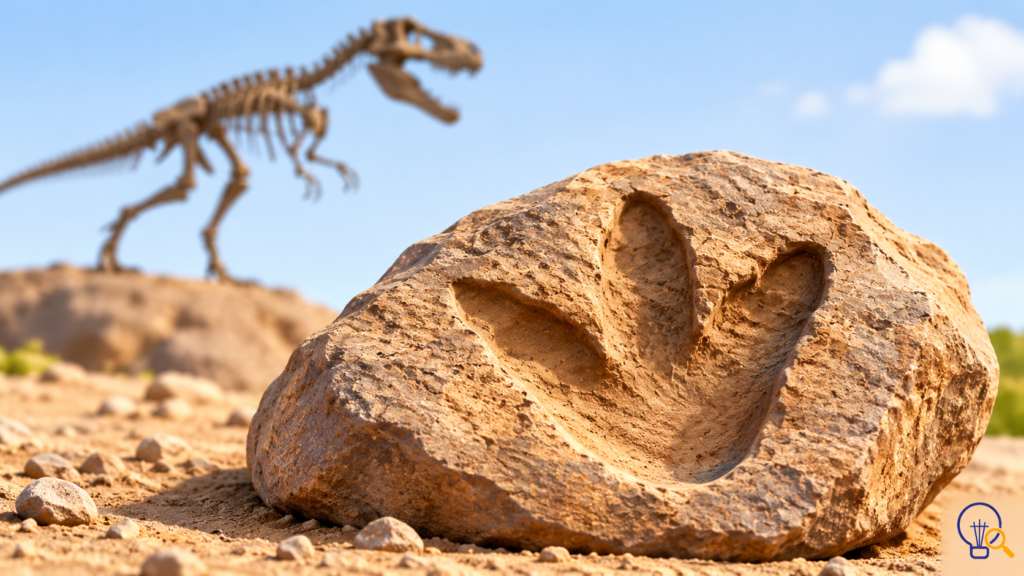
Scientists have discovered dinosaur skeletons, teeth, footprints, skin impressions, and fossilized droppings. Each type of discovery provides different information about how these animals lived.
Archaeopteryx Had Bird and Dinosaur Features
Archaeopteryx is one of the most famous fossils in evolutionary science. It had feathers and wings like modern birds, along with features such as teeth and a long bony tail. Its combination of characteristics makes it especially important for understanding the evolutionary relationship between birds and dinosaurs.
Trilobites Ruled Ancient Oceans
Trilobites were marine animals with hard, segmented exoskeletons. They appeared around 520 million years ago and survived for more than 250 million years. Scientists have identified more than 20,000 trilobite species.
Ammonites Had Spiral Shells
Ammonites were ancient marine animals with distinctive coiled shells. Their fossils are found in many parts of the world. Because they evolved relatively quickly and spread widely, they are useful for comparing the ages of rock layers.
Megalodon Was a Giant Shark
Megalodon was a gigantic extinct shark that lived millions of years ago. Its enormous fossil teeth are among the most recognizable remains of prehistoric marine predators. Scientists use these teeth to investigate its size, diet, and evolutionary history.
Ancient Sea Reptiles Reached Huge Sizes
The fossil record includes marine animals with extraordinary body sizes. For example, ichthyosaurs were marine reptiles that included some enormous species. Their fossils help scientists understand the diversity of ancient ocean ecosystems.
Dinosaur Eggs Reveal Reproduction
Scientists have discovered fossilized dinosaur eggs, nests, and embryos. These finds provide clues about how dinosaurs reproduced, where they laid their eggs, and how their young developed.
Fossil Feathers Reveal Ancient Birds
Some fossils preserve impressions of feathers alongside skeletal structures. These discoveries help researchers investigate the appearance, flight-related adaptations, and evolutionary history of ancient birds and feathered dinosaurs.
Ancient Fish Reveal Vertebrate History
Fish fossils are important for understanding the development of vertebrate life. Their preserved skeletons, scales, and teeth allow scientists to study how aquatic animals changed over geological time.
Mammoths Reveal Ice Age Life
Woolly mammoths were large relatives of modern elephants that lived during the Ice Age. Their bones, teeth, tusks, and occasionally frozen remains help researchers investigate their diets, habitats, and adaptations to cold environments.
Fossils and Earth’s History
Some Fossils Are Hundreds of Millions of Years Old
The fossil record contains evidence of life that existed hundreds of millions of years ago. Some fossils date back much further, helping scientists investigate the early history of life on Earth.
Fossils Explain Evolution
By comparing fossils from different geological periods, researchers can observe how organisms changed over time. Fossils provide evidence of extinct species, evolutionary relationships, and the development of new biological features.
Fossils Reveal Ancient Climates
Certain fossils reveal the environmental conditions in which organisms lived. For example, fossilized plants and marine organisms can provide clues about ancient temperatures, rainfall patterns, and ocean conditions.
Marine Fossils Exist in Mountains
Some mountain rocks contain fossils of marine animals. This happens because geological forces can lift ancient seabeds to higher elevations over millions of years. The fossils provide evidence that these places were once covered by water.
Fossils Record Mass Extinctions
The fossil record shows that life on Earth has experienced several major extinction events. By studying fossils before and after these events, scientists can investigate how species disappeared and how ecosystems changed.
Fossils Reveal Ancient Food Chains
Some fossils preserve evidence of feeding relationships. Coprolites, bite marks, and fossilized stomach contents can help researchers identify what ancient animals ate and how different organisms interacted.
Index Fossils Help Date Rocks
Index fossils are remains of organisms that were widespread but existed during a relatively limited geological period. Scientists use them to compare rock layers from different locations and estimate their relative ages.
Transitional Fossils Show Evolutionary Changes
Transitional fossils have combinations of characteristics associated with earlier and later groups of organisms. Archaeopteryx is a well-known example that helps researchers investigate the evolutionary history of birds.
Fossils Reconstruct Ancient Landscapes
Fossilized plants, shells, and animal remains help scientists reconstruct environments that existed long ago. A collection of marine fossils in a rock layer, for example, can indicate that an area was once underwater.
The Fossil Record Is Incomplete
Scientists have not discovered every organism that ever lived. Many organisms disappeared without leaving preserved remains, while others may still be buried deep underground or hidden in unexplored locations. New discoveries continue to add information to Earth’s biological history.
Fossil Discoveries and Science
Paleontologists Study Ancient Life
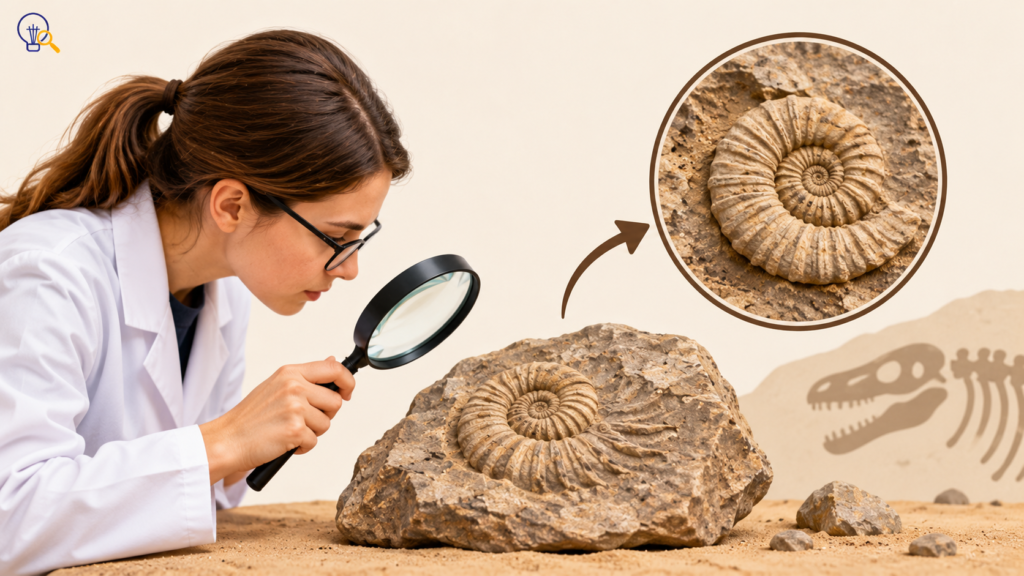
Paleontologists investigate ancient life by examining fossils and the rocks surrounding them. Their work helps explain how prehistoric organisms lived, evolved, and became extinct.
Fossils Exist on Every Continent
Fossils have been discovered across the world, including Antarctica. These findings demonstrate that ancient life existed in environments very different from those found in the same regions today.
Mount Everest Has Marine Fossils
The rocks of the Himalayas include ancient marine fossils. These remains help demonstrate how geological processes pushed rocks that once formed beneath the sea to extraordinary heights.
Some Fossils Preserve Animal Skin
Certain fossil discoveries contain impressions of ancient skin. These marks help scientists investigate the body coverings and external features of prehistoric animals.
Teeth Reveal Ancient Diets
Teeth often provide important clues about an animal’s diet. Their shapes, sizes, and wear patterns can help researchers determine whether an extinct animal ate plants, meat, or a varied diet.
Geological Maps Help Find Fossils
Geological maps show the distribution, types, and ages of rocks in different areas. Paleontologists use these maps to identify locations where particular fossils may be preserved.
Fossils Help Date Ancient Environments
Researchers study the fossils found within rock layers to understand when those layers formed and what kinds of environments existed at the time. This information helps build a clearer picture of Earth’s geological history.
Some Fossil Sites Preserve Amazing Details
Certain fossil deposits are known for their exceptional preservation. These sites may contain delicate body structures, soft-tissue impressions, or unusually large collections of ancient organisms.
Fossils Are Valuable Scientific Resources
Every fossil preserves a piece of Earth’s history. Once a specimen or fossil site is damaged or destroyed, its original scientific information may be lost forever. That is why responsible collection and preservation are important.
New Discoveries Change Our Understanding
Scientists continue to discover fossils in previously unexplored locations and examine older specimens with improved technology. Each discovery can provide new evidence about ancient species, evolutionary relationships, and the history of our planet.
Why Fossils Matter
Fossils help us understand much more than the appearance of prehistoric animals. They provide evidence about how life developed, how species adapted to changing environments, and why certain organisms disappeared.
Here are some important ways fossils contribute to science:
| Importance | What Fossils Reveal |
|---|---|
| Evolution | How organisms changed over time |
| Ancient environments | What Earth’s landscapes and oceans looked like |
| Extinction | How and when different species disappeared |
| Climate history | Clues about past temperatures and environments |
| Animal behavior | Evidence of movement, feeding, and nesting |
| Geological history | The relative ages and formation of rock layers |
Frequently Asked Questions
What Exactly Is a Fossil?
A fossil is the preserved remains or evidence of an organism that lived in the past. It can include bones, teeth, shells, leaves, footprints, and burrows.
How Long Does Fossil Formation Take?
There is no single time limit for fossil formation. Some processes may take thousands of years, while many mineralized fossils develop over much longer periods.
What Are the Main Types of Fossils?
The two main categories are body fossils and trace fossils. Body fossils preserve physical parts of organisms, while trace fossils record activities such as walking, feeding, and burrowing.
Where Are Fossils Commonly Found?
Fossils are commonly found in sedimentary rocks, including limestone, sandstone, and shale. Ancient marine environments, river deposits, and lake sediments are particularly important fossil-bearing locations.
Can Humans Become Fossils?
Yes. Human bones and teeth can become fossilized if suitable conditions preserve them over time. However, this is relatively rare.
How Are Fossils Different From Dinosaur Bones?
A dinosaur bone is a body part that may become a fossil through preservation and mineralization. A fossil is a broader term that includes the remains or traces of any ancient organism, not just dinosaurs.
What Do Fossil Footprints Reveal?
Fossil footprints provide evidence of an animal’s movement and behavior. They can help researchers investigate walking patterns, group movement, and interactions with the environment.
Who Studies Fossils?
Paleontologists study fossils to understand prehistoric organisms, evolution, ancient ecosystems, and Earth’s history.
Final Thoughts
Fossils offer an extraordinary window into Earth’s distant past. They preserve evidence of animals, plants, and microorganisms that existed long before modern life developed. From dinosaur footprints and ancient shark teeth to delicate insects trapped in amber, every discovery tells a different story.
The most fascinating thing is that many fossils still remain hidden beneath layers of rock, waiting to be discovered. As scientists continue exploring and studying these ancient remains, they uncover new details about how life evolved and how our planet changed.
Whether you’re interested in dinosaurs, prehistoric oceans, or the origins of modern species, learning about fossils makes Earth’s history even more fascinating.
