

Your body contains an incredible framework that helps you stand, walk, run, and perform everyday activities. But have you ever wondered how more than 200 bones work together to keep everything in place? From the tiny bones responsible for hearing to the strong thigh bone that supports your weight, each one has a fascinating job.
Bones are not just hard structures. They are living tissues that grow, repair themselves, store minerals, and even produce blood cells. Their abilities are far more interesting than most people realize.
In this article, you’ll discover 30 fun facts about the skeletal system that reveal surprising details about your bones, joints, and the hidden framework inside your body.
The Skeletal System at a Glance
Before exploring these interesting facts, let’s look at some basic information about the human skeleton.
| Feature | Interesting Detail |
|---|---|
| Adult bone count | Usually 206 |
| Bones at birth | Approximately 270 |
| Main divisions | Axial and appendicular |
| Axial skeleton | 80 bones |
| Appendicular skeleton | 126 bones |
| Largest bone | Femur |
| Smallest bone | Stapes |
| Main bone mineral | Calcium phosphate |
| Main structural protein | Collagen |
| Major functions | Support, movement, protection, and blood cell production |
30 Fun Facts About the Skeletal System
Your Body Has 206 Bones in Adulthood
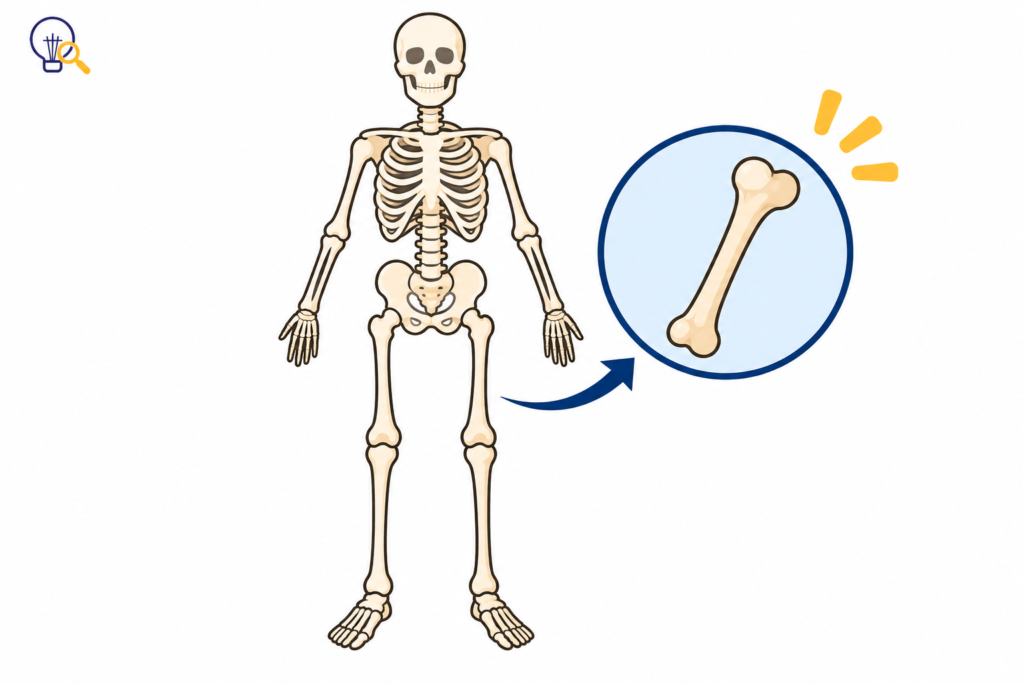
The adult human body usually contains 206 bones. They work together to support your body, protect important organs, and help you move. Each bone has a particular shape and purpose. Some are large and strong, while others are tiny and delicate.
Babies Are Born With More Bones Than Adults
A newborn baby has approximately 270 bones. As children grow, several bones gradually join together through a process called fusion. This is why adults usually have fewer bones than babies.
The Femur Is the Longest Bone in Your Body
The femur, commonly known as the thigh bone, is the longest and strongest bone in the human body. It extends from the hip to the knee and supports much of your body weight during standing, walking, and running.
The Smallest Bones Are Inside Your Ears
Your middle ear contains three tiny bones called the malleus, incus, and stapes. They are also known as the hammer, anvil, and stirrup because of their shapes. These bones help transmit sound vibrations toward the inner ear, allowing you to hear.
Your Skull Protects Your Brain
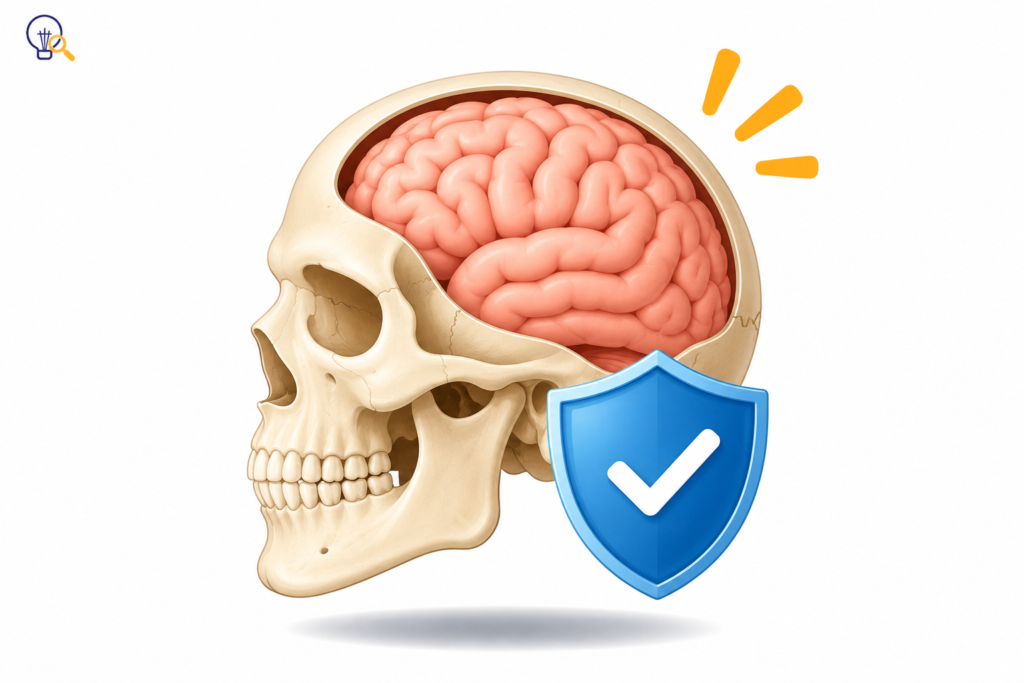
The skull forms a hard protective structure around your brain. It also supports your face and provides openings for important nerves and blood vessels. Most skull bones are joined by strong, immovable connections called sutures.
Your Spine Develops With 33 Vertebrae Before Some Fuse
The vertebral column develops with approximately 33 vertebrae. In adulthood, five sacral vertebrae fuse to form the sacrum, while several smaller coccygeal vertebrae usually fuse to form the coccyx. Your spine supports your upper body, allows flexibility, and protects the spinal cord.
Your Rib Cage Protects Important Organs
Your rib cage usually contains 12 pairs of ribs. These bones surround your chest and help protect your heart and lungs. They also work with the muscles of your chest to support breathing.
Your Hands Contain 27 Bones Each
Each human hand has 27 bones. These include eight wrist bones, five palm bones, and 14 finger bones. Their arrangement allows you to grip objects, write, type, and perform delicate tasks.
Your Feet Have 26 Bones Each
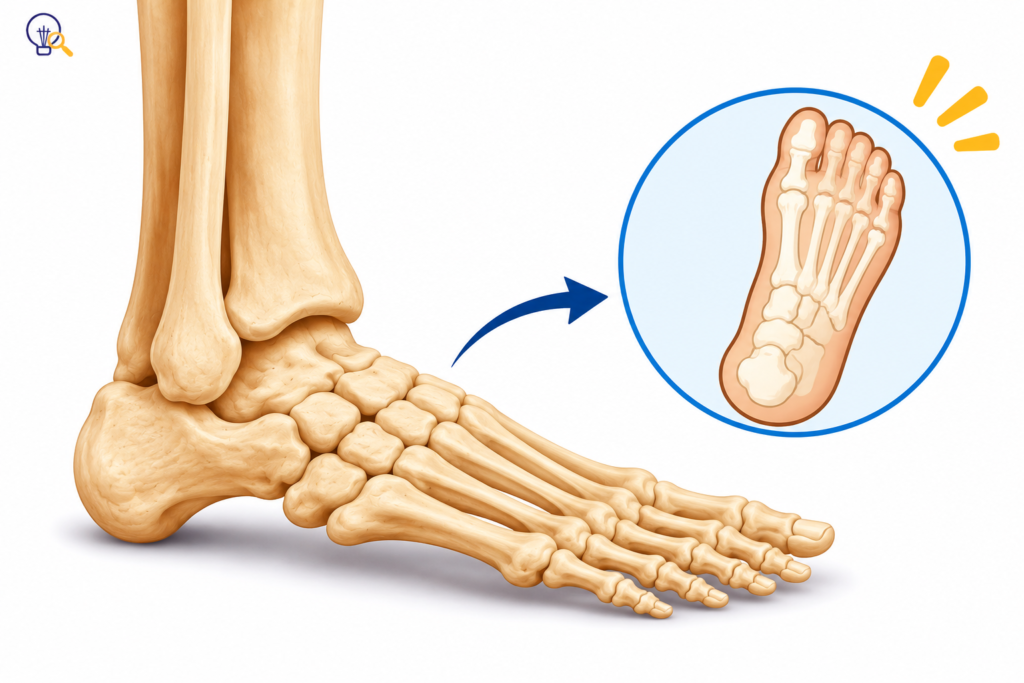
Each foot contains 26 bones that help support your weight and maintain balance. Together with muscles, ligaments, and tendons, these bones allow you to walk, run, jump, and stand comfortably.
The Hyoid Bone Does Not Directly Join Another Bone
The hyoid is a small, U-shaped bone located in your neck. Unlike most other bones, it does not directly connect to another bone. Muscles and ligaments hold it in position. It also helps support the tongue and movements involved in swallowing and speaking.
Your Kneecap Is the Largest Sesamoid Bone
The patella, or kneecap, is the largest sesamoid bone in the human body. These special bones develop within tendons. The kneecap protects the front of the knee and helps thigh muscles work more efficiently when you straighten your leg.
Your Body Has Two Main Skeletal Divisions
The human skeleton is divided into the axial and appendicular sections. The axial skeleton includes the skull, spine, ribs, and sternum. The appendicular skeleton contains the bones of your arms, legs, shoulders, and pelvis.
Bones Are Living Tissues
Bones are not lifeless structures. They contain living cells, blood vessels, and nerves. These tissues receive nutrients, respond to changes in the body, and continuously maintain bone health.
Your Bones Are Constantly Renewing Themselves
Your body regularly removes old bone tissue and replaces it with new tissue. This natural process is called bone remodeling. It helps maintain strength and allows bones to adapt to physical demands.
Bone Marrow Produces Blood Cells
Inside certain bones, you will find a soft tissue called bone marrow. Red bone marrow produces red blood cells, white blood cells, and platelets. These cells help transport oxygen, fight infections, and control bleeding.
Your Bones Store Calcium
Bones act as a storage area for important minerals, especially calcium and phosphorus. When your body needs calcium for other functions, some of it can be released from bone tissue into the bloodstream.
Collagen Helps Bones Resist Breaking
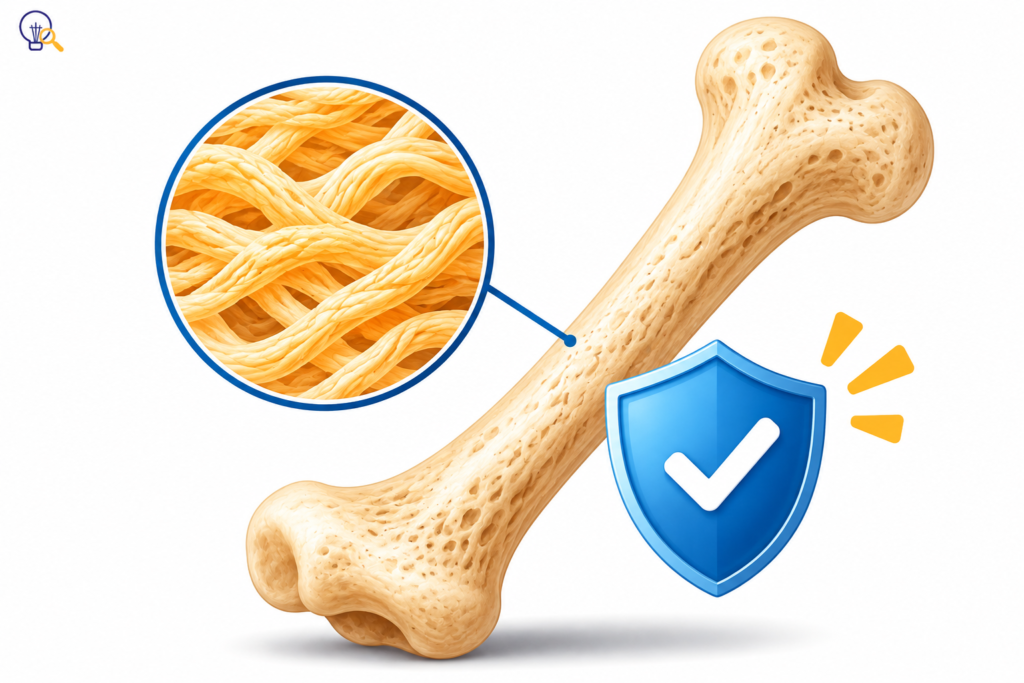
Bones contain a protein called collagen. It provides a flexible framework that helps bone tissue resist cracking. Minerals, particularly calcium phosphate, make bones hard and strong.
Cartilage Helps Your Joints Move Smoothly
Cartilage is a flexible connective tissue found in several parts of your body. At the ends of many bones, it creates smooth surfaces that reduce friction during movement. It also helps absorb pressure in joints.
Your Joints Connect Different Bones
Joints are places where two or more bones meet. They allow different types of movement, depending on their structure. Your knees, shoulders, elbows, and hips are examples of joints that help you perform everyday activities.
Some Joints Allow More Movement Than Others
Not every joint in your body moves in the same way. Your shoulder allows a wide range of movement, while the joints between many skull bones remain immovable. This variety helps your body balance flexibility with stability.
Your Jaw Is the Only Freely Movable Skull Bone
The mandible, or lower jawbone, is the only skull bone that moves freely at a joint. It allows you to chew food, speak, yawn, and open and close your mouth.
Your Spine Helps You Maintain Balance
Your spine does more than hold your body upright. Its natural curves help distribute weight and maintain balance. It also allows you to bend, twist, and move while protecting the spinal cord.
Bones Can Repair Themselves After a Fracture
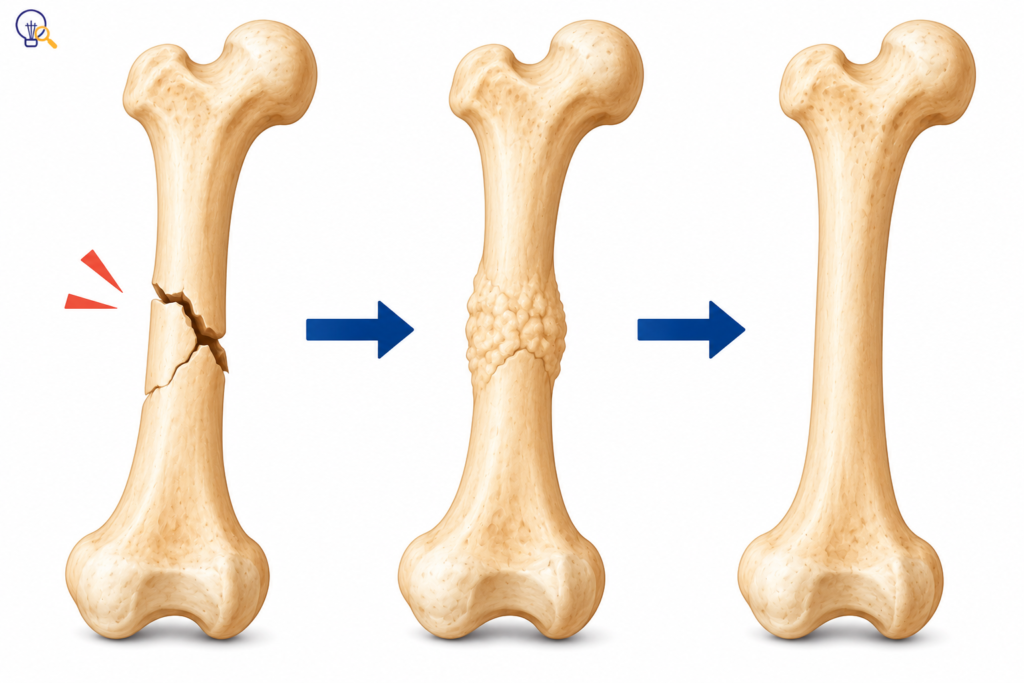
When a bone breaks, your body starts a natural healing process. It forms a blood clot around the injured area and gradually develops new tissue to bridge the break. Over time, the bone remodels, although healing time depends on the injury.
Exercise Helps Keep Your Bones Strong
Physical activities such as walking, running, dancing, and strength training place healthy demands on your bones. These activities encourage the body to maintain bone tissue and support long-term bone health.
Your Bones Change as You Grow
During childhood and adolescence, bones grow in length and become stronger. Special areas called growth plates help long bones increase in length. These plates gradually close as a person reaches skeletal maturity.
The Skull Is Made Up of 22 Bones
The adult skull is commonly described as having 22 bones: eight cranial bones and 14 facial bones. These bones form the structure of your head, protect the brain, and support important facial features.
Your Ribs Help You Breathe
Your ribs and sternum form much of the chest wall. During breathing, the ribs move with the help of muscles between them. This movement changes the size of the chest cavity and helps air move into and out of your lungs.
Bones Come in Different Shapes
Bones come in different shapes depending on their functions. The femur is a long bone, wrist bones are short bones, skull bones are flat bones, and vertebrae are irregular bones. Their shapes help them perform different jobs.
Your Bones Respond to Physical Stress
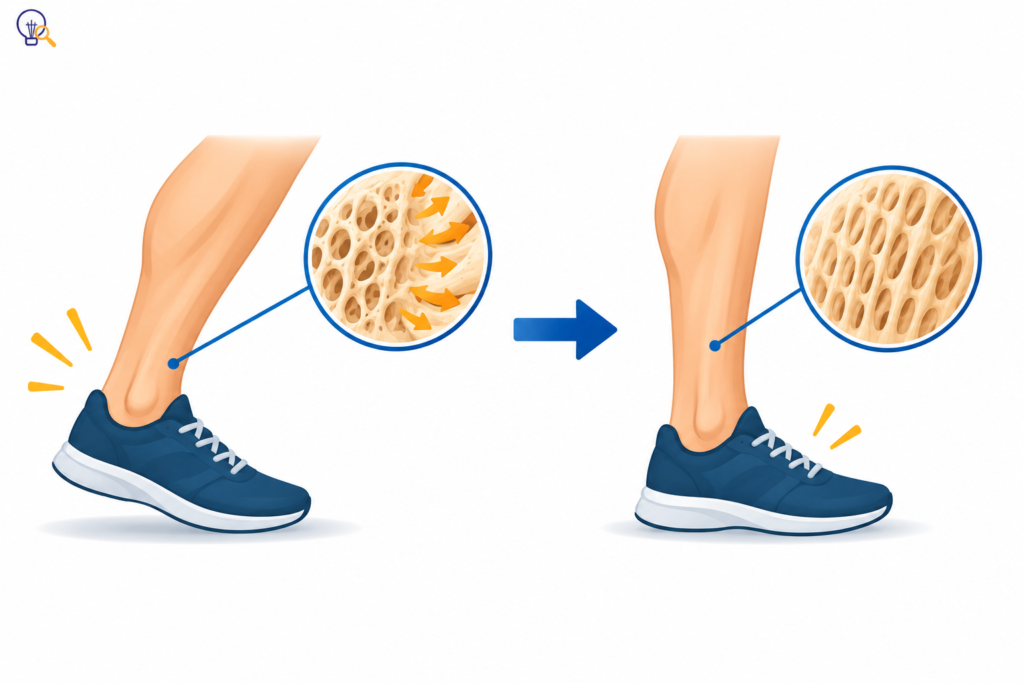
Bone tissue can adapt to the demands placed on it. Regular physical activity provides mechanical stress that encourages bone maintenance and formation. On the other hand, prolonged inactivity can contribute to bone loss.
Your Skeleton Accounts for About 15% of Body Weight
The bones of an average adult make up roughly 15% of body weight, although the exact proportion varies between individuals. Despite their strength, bones are relatively lightweight compared with the support they provide.
Why Is the Skeletal System Important?
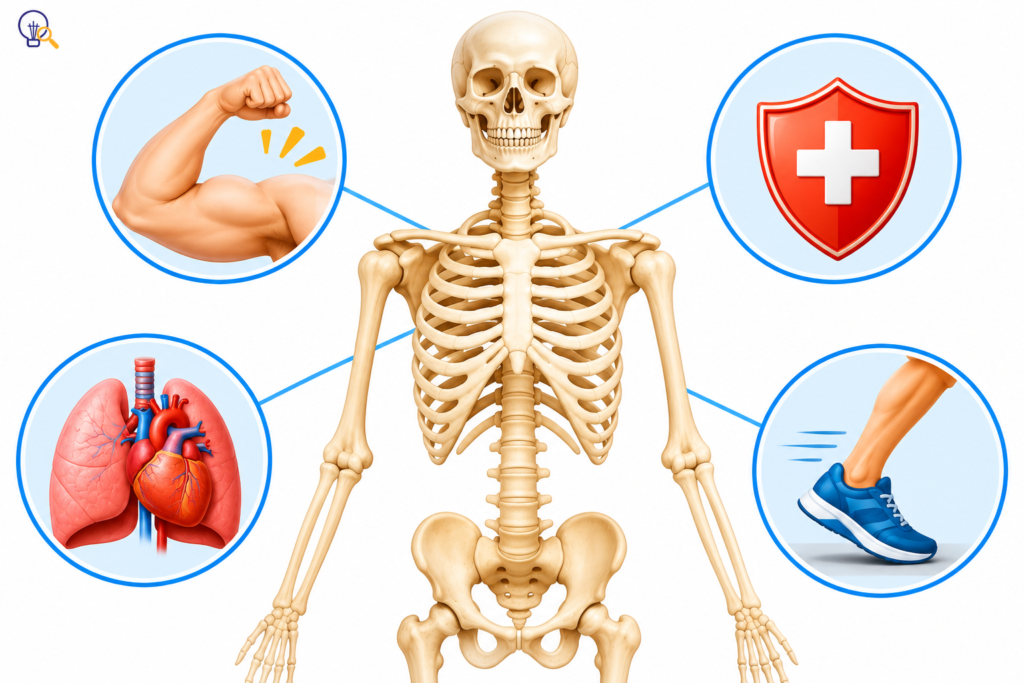
The bones, joints, and supporting tissues perform several essential jobs that keep your body functioning properly.
- Provides support: Gives your body its shape and helps you maintain an upright posture.
- Protects organs: The skull protects the brain, while the rib cage protects the heart and lungs.
- Allows movement: Bones work with muscles and joints to help you walk, run, bend, and lift objects.
- Produces blood cells: Bone marrow creates important blood cells.
- Stores minerals: Bones store calcium and phosphorus that your body needs.
- Maintains balance: The skeleton provides a stable framework for everyday activities.
How Can You Keep Your Bones Healthy?
Taking care of your bones is important at every stage of life. Simple daily habits can help maintain their strength and support your overall health.
- Eat calcium-rich foods: Include milk, yogurt, cheese, leafy green vegetables, and other calcium sources in your diet.
- Get enough vitamin D: Vitamin D helps your body absorb calcium.
- Stay physically active: Walking, dancing, and strength exercises help support bone health.
- Eat a balanced diet: Include enough protein, fruits, vegetables, and other essential nutrients.
- Avoid smoking: Smoking can negatively affect bone health.
- Maintain healthy habits: Good nutrition and regular activity help protect your bones as you age.
Frequently Asked Questions About the Skeletal System
How many bones are in the human body?
An adult human body usually has 206 bones. Babies have approximately 270 bones at birth, but some gradually fuse together as they grow.
What is the largest bone in the human body?
The femur, or thigh bone, is the largest and strongest bone in the human body. It supports body weight and helps with walking, running, and standing.
What is the smallest bone in the human body?
The stapes, located in the middle ear, is the smallest bone in the human body. It helps transmit sound vibrations to the inner ear.
What are the five main functions of the skeletal system?
The five major functions are providing support, protecting organs, allowing movement, producing blood cells, and storing minerals.
Can bones grow and repair themselves?
Yes. Bones grow during childhood and adolescence. They also have the ability to repair damaged tissue after fractures through a natural healing process.
What are the two main parts of the skeletal system?
The two main divisions are the axial skeleton and the appendicular skeleton. The axial skeleton forms the central framework, while the appendicular skeleton includes the arms, legs, and their connecting structures.
Why do humans need calcium for healthy bones?
Calcium helps build and maintain strong bones. It also supports other important functions, including muscle contraction and nerve signaling.
Final Thoughts
The human skeleton is much more than a collection of bones. It provides support, protects important organs, helps you move, and performs essential functions that keep your body healthy. From the tiny bones in your ears to the powerful femur in your thigh, every part has an important role.
These 30 interesting facts show how remarkable the human body really is. Understanding how your bones work can also encourage you to make healthier choices, such as eating nutritious foods and staying physically active.
Your bones support you throughout your life, so giving them proper care is one of the best ways to protect your long-term health.
Learn more about how your body works by exploring these interesting facts about children and discovering the amazing functions of its different systems.
