

Corn may look like an ordinary food, but there is much more to this golden crop than meets the eye. Did you know that it was once a tiny wild grass, that every strand of corn silk can help produce a kernel, and that the same crop can become popcorn, animal feed, and even fuel? Its journey from ancient Mexican farms to fields around the world is full of surprising discoveries.
These corn facts reveal the fascinating science, history, and everyday uses behind one of the world’s most important crops. Keep reading because some of these facts may completely change the way you look at corn!
Basic Corn Facts
Corn Belongs to the Grass Family
Corn belongs to the Poaceae family, commonly known as the grass family. This means it is related to familiar cereal crops such as wheat, rice, barley, and oats. Although its appearance is different from ordinary lawn grass, its basic plant structure shares many similarities.
Like other grasses, it has long leaves, a strong stem, and a flowering system that produces seeds. These characteristics help explain why farmers consider it one of the major cereal crops worldwide.
Its Scientific Name Is Zea mays
The scientific name of this plant is Zea mays. Botanists use this name to identify the species and distinguish it from other plants. It is also commonly called maize in many countries.
Different varieties belong to the same species but have different colours, textures, sizes, and growing characteristics.
It Is a Cereal Grain
Although people often treat fresh sweet corn as a vegetable, mature kernels are classified as cereal grains. They develop from the flowers of the plant and contain the nutrients needed to support a new seedling.
This distinction depends partly on how the crop is harvested and used. Fresh sweet corn is usually eaten while the kernels are tender, whereas mature field maize is often dried before processing.
Corn Is an Annual Plant
Most cultivated varieties complete their life cycle within one growing season. The seed germinates, the young plant develops leaves and roots, flowering takes place, and kernels eventually mature.
After producing mature seeds, the plant normally dries out and dies. Farmers collect the harvest and save or process the kernels for different purposes.
It Can Grow Several Metres Tall
Many varieties reach approximately 2 to 3 metres in height when grown under suitable conditions. Some varieties can grow even taller, depending on their genetics, climate, soil quality, and access to water.
Its tall structure helps support the leaves, flowering parts, and developing ears. The height also makes large fields easy to recognize during the growing season.
Its Kernels Come in Different Colours
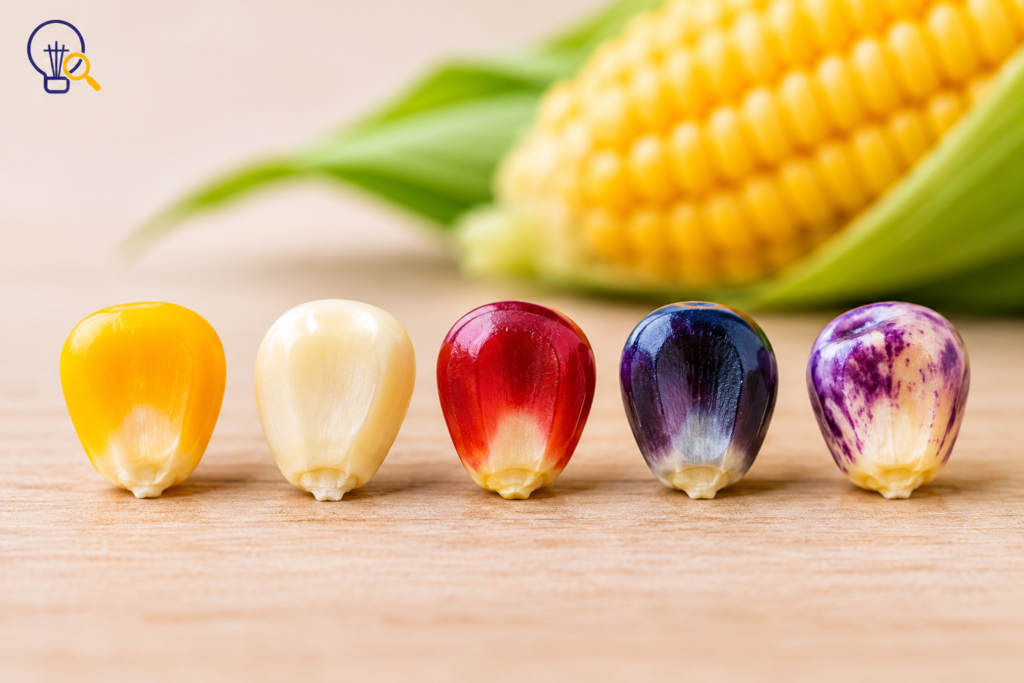
Yellow and white are among the most familiar colours, but maize can produce kernels in several other shades. Some traditional varieties have red, purple, blue, brown, or nearly black kernels.
These colours come from natural plant pigments. Different varieties are grown for particular food traditions, decorative purposes, and agricultural characteristics.
Each Kernel Can Produce a New Plant
A mature kernel is a seed containing an embryo and stored food. When it receives enough moisture, warmth, and oxygen, germination can begin.
The embryo develops into a young plant, while the stored food supports its early growth. This is why farmers carefully select healthy seeds before planting a new crop.
It Has Several Different Varieties
Farmers grow different types depending on their intended use. Sweet varieties are popular for fresh eating, while field varieties are commonly used for animal feed and industrial processing.
Popcorn, flour maize, and flint maize also have their own characteristics. These differences affect the texture, starch composition, and best preparation methods.
History and Origin
It Was First Domesticated in Mexico
The history of modern maize begins in southern Mexico, where Indigenous communities started domesticating its wild ancestor thousands of years ago. Archaeological evidence suggests that this process began around 9,000 years ago.
Early communities gradually selected plants with useful characteristics. Over many generations, they developed a crop that provided more food and was easier to harvest than its wild ancestor.
Teosinte Is Its Wild Ancestor
Modern maize developed from a wild grass known as teosinte. This plant looks quite different from the large ears commonly found in grocery stores today.
Its seeds were smaller and covered by hard outer structures. Through generations of selective breeding, early farmers gradually transformed this wild grass into a more productive crop.
Ancient Farmers Changed Its Appearance
Early agricultural communities played a major role in developing modern maize. They saved seeds from plants with desirable qualities, such as larger ears, softer kernels, and better harvests.
This process is called selective breeding. Over thousands of years, it produced many varieties that could grow in different environments and meet different food requirements.
It Was Important to Ancient Civilizations
Maize became an essential food source for several Indigenous civilizations in the Americas. The Maya and Aztec communities used it in daily meals and traditional practices.
It also held cultural and religious importance in different societies. In some ancient traditions, maize was connected with creation stories, agriculture, and the relationship between people and nature.
It Spread Across the Americas
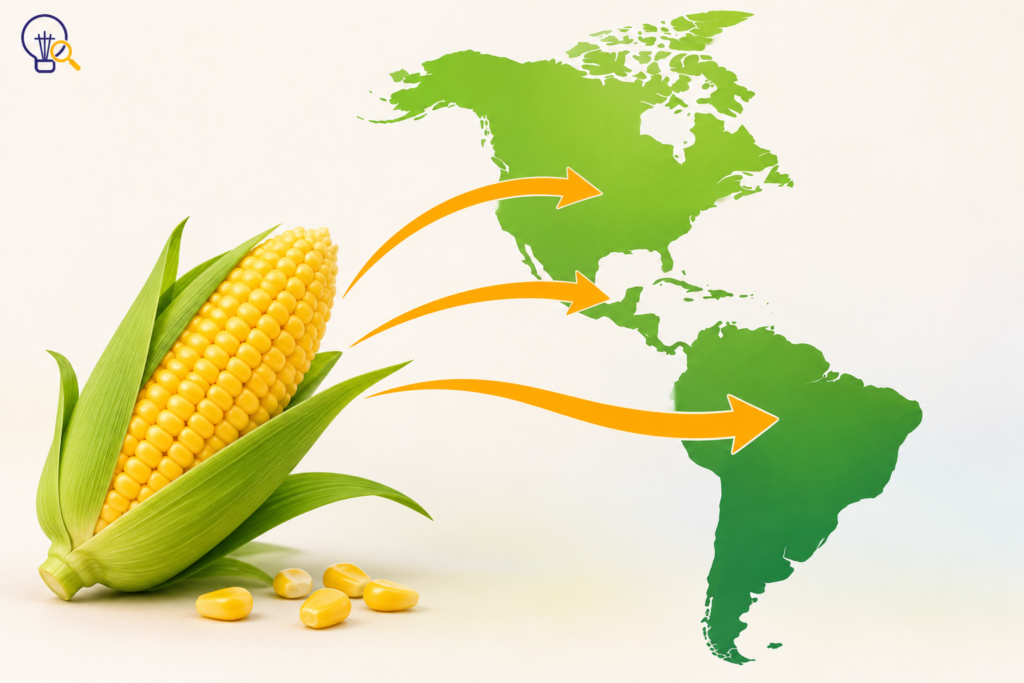
As farming communities developed, they carried seeds to new regions. This helped the crop spread throughout Central America, North America, and parts of South America.
Different climates encouraged farmers to develop varieties suited to their local conditions. As a result, many traditional types developed across the continent.
It Reached Europe After the Arrival of Europeans in the Americas
European explorers encountered maize after reaching the Americas in the late fifteenth century. They introduced the crop to Europe, where farmers gradually began cultivating it.
Its ability to produce useful harvests made it attractive to agricultural communities. From Europe, it continued spreading to other regions through trade and farming networks.
It Eventually Reached Africa and Asia
Maize gradually became established in several African and Asian countries. Farmers adopted it because different varieties could grow in a range of climates and provide valuable food and feed.
Today, it plays an important role in many regional diets. It is used in traditional dishes, flour production, livestock feeding, and commercial food manufacturing.
It Has Thousands of Years of Agricultural History
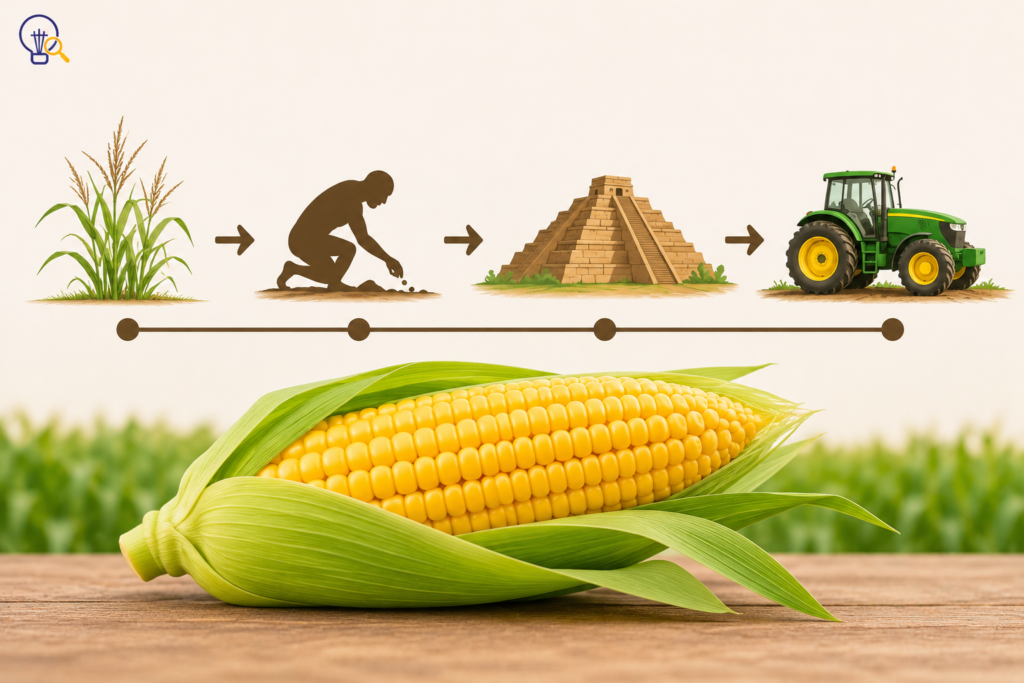
Few modern food crops have such a long relationship with human agriculture. Generations of farmers have selected, planted, and improved maize varieties to meet changing needs.
Its development also demonstrates how human knowledge can transform wild plants into important agricultural resources. The crop remains a major part of farming systems around the world.
Growth and Structure
The Tassel Produces Pollen
The tassel is the flowering structure found at the top of the plant. It contains many small flowers that produce pollen during the reproductive stage.
When the tassel releases pollen, air movement carries the tiny grains to the female flowers below. This process is essential for successful kernel development.
Silks Are Part of the Female Flower
The thin strands emerging from the developing ear are called silks. Each silk connects to an individual ovule that can develop into a kernel after successful fertilization.
Although they may look like simple threads, they play an important role in reproduction. Their condition and exposure to pollen can influence the final number of kernels.
Wind Helps With Pollination
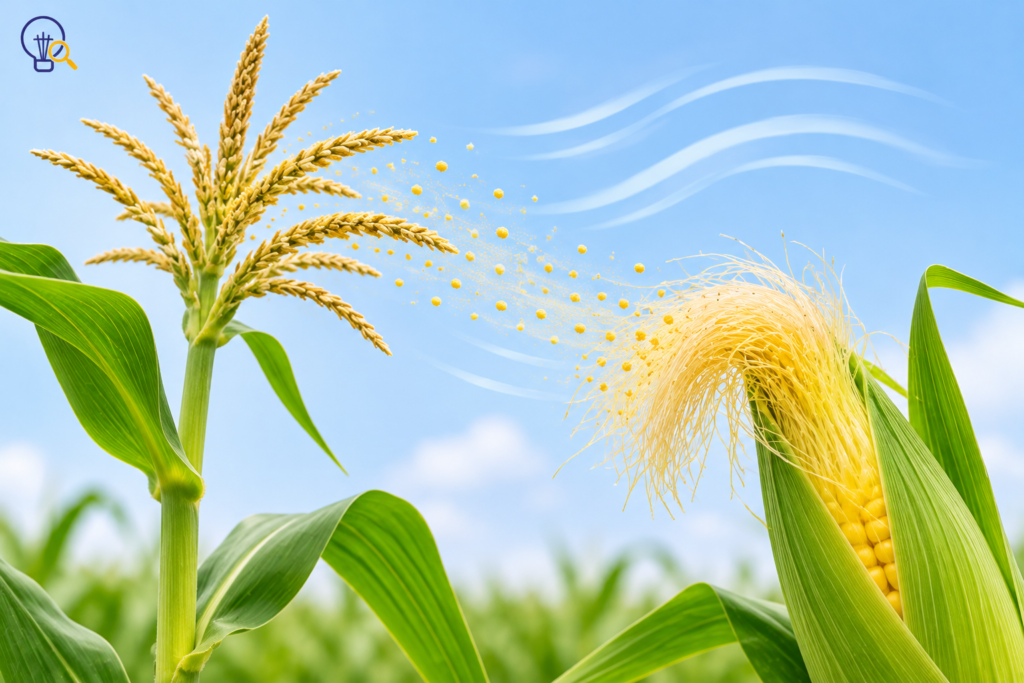
Maize mainly relies on wind to transfer pollen from the tassel to the silks. Unlike many flowering plants that depend on insects, it produces large amounts of lightweight pollen that can travel through the air.
Successful pollination depends on the timing of pollen release and silk emergence. Poor weather or moisture stress during this stage can reduce kernel development.
Each Silk Can Lead to a Kernel
Every silk is connected to a potential kernel. When compatible pollen reaches it, fertilization can occur and the kernel begins to develop.
This explains why poorly pollinated ears sometimes have empty spaces. If certain silks do not receive pollen at the right time, the corresponding kernels may fail to form.
An Ear Contains Hundreds of Kernels
A mature ear can contain several hundred individual kernels arranged in neat rows. The exact number depends on the variety and the conditions in which the plant grows.
Adequate water, nutrients, sunlight, and successful pollination all contribute to a healthy harvest. Farmers pay close attention to these factors throughout the growing season.
Kernel Rows Are Usually Even in Number
Many ears have an even number of kernel rows around the cob. The number varies between varieties and individual plants.
These rows form during the early development of the ear. Their arrangement gives the familiar organized appearance seen when an ear is opened.
The Cob Supports the Kernels
The cob is the central structure that holds the kernels together. It provides physical support while the seeds develop and mature.
After harvesting, the cob is usually separated from the kernels during processing. Depending on the farming system, it may be used for animal bedding, compost, or other agricultural purposes.
The Plant Has Strong Stems
Its thick, upright stem supports the leaves and reproductive structures. It also contains tissues that transport water and nutrients throughout the plant.
A healthy stem helps the crop remain upright, especially during strong winds and heavy rainfall. However, severe weather and weak root systems can still cause plants to fall over.
Its Roots Help Keep It Stable
Maize develops underground roots that absorb water and nutrients from the soil. It also produces supporting roots from the lower stem, which help keep the plant upright.
A strong root system is particularly important because the plant can become quite tall. Good soil conditions allow roots to develop properly and support healthy growth.
Nutrition and Health
It Provides Dietary Fibre
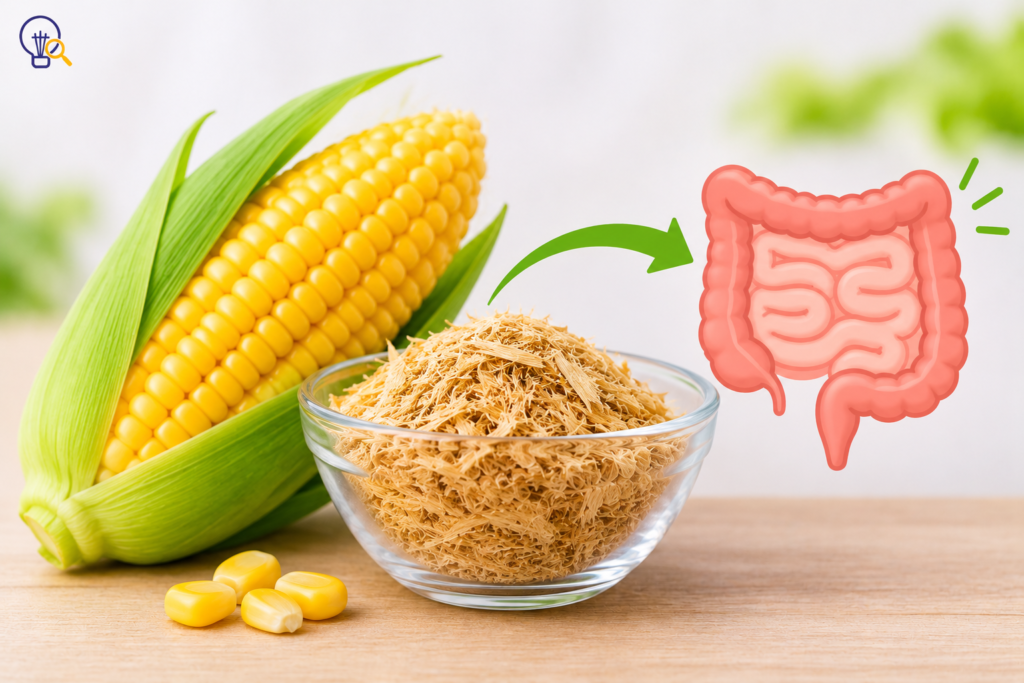
Whole kernels contain dietary fibre, which supports normal digestion and contributes to digestive health. Fibre also helps you feel satisfied after eating.
The amount depends on the variety and how the food is processed. Whole kernels generally retain more natural fibre than highly refined maize products.
It Contains Several B Vitamins
Maize provides several B vitamins, including thiamin, niacin, and folate in varying amounts. These nutrients help the body perform important functions, including energy metabolism and normal cell activity.
Different products may contain different levels depending on processing and fortification. Eating a variety of whole foods is a practical way to obtain these nutrients.
It Provides Carbohydrates for Energy
Carbohydrates are the main source of energy in maize. They help supply fuel for everyday activities and support the body’s normal functions.
This is one reason why it has been an important staple food for many communities. It can be prepared in different ways to provide an affordable source of energy.
It Contains Plant-Based Protein
Maize also contributes some protein to the diet. However, its protein composition is not ideal as a sole protein source because it is relatively low in certain essential amino acids, particularly lysine and tryptophan.
Combining it with foods such as beans and lentils can help create a more balanced meal. This is one reason traditional food combinations are nutritionally useful.
It Contains Important Minerals
Different maize varieties provide minerals such as magnesium, phosphorus, and potassium. These nutrients support several body functions, including muscle activity, bone health, and normal cellular processes.
The actual mineral content depends on the soil, variety, and processing method. Whole-grain products generally retain more nutrients than some refined alternatives.
Yellow Varieties Contain Natural Pigments
Yellow kernels contain carotenoids, including lutein and zeaxanthin. These natural pigments are also found in other colourful plant foods.
Lutein and zeaxanthin are associated with eye health because they accumulate in the retina. However, the amount present can vary considerably between varieties.
Whole Kernels Offer More Fibre Than Some Refined Products
The outer parts of the kernel contain dietary fibre and other nutrients. When the grain is heavily refined, some of these components may be removed.
Choosing less-processed products can help retain more of the grain’s natural nutritional value. Whole kernels, for example, provide a different nutritional profile from highly refined starch.
Its Nutritional Value Depends on Preparation
Fresh, boiled, roasted, and processed maize products do not always have the same nutritional composition. Cooking methods and added ingredients can change the amount of fat, salt, sugar, and calories in a serving.
For example, plain boiled sweet corn is different from a serving covered in butter and salt. Paying attention to preparation helps you understand what you are eating.
Nutritional Comparison of Common Corn Products
The following table explains how different products are commonly used and what makes them different nutritionally.
| Product | Main nutritional feature | Common use |
| Sweet corn | Carbohydrates, fibre, and vitamins | Fresh meals and salads |
| Popcorn | Whole-grain fibre | Snack food |
| Cornmeal | Mainly carbohydrates | Porridge and baking |
| Corn flour | Mostly carbohydrates | Breads and cooking |
| Cornstarch | Mostly starch | Thickening sauces |
| Whole maize kernels | Fibre and carbohydrates | Traditional dishes |
Uses Around the World
It Is Used to Make Popcorn
Popcorn comes from a special variety of maize with a hard outer covering and a suitable amount of moisture inside the kernel.
When heated, the water turns into steam and creates pressure. Eventually, the outer shell breaks open, allowing the soft starchy interior to expand into the familiar fluffy snack.
It Is a Main Ingredient in Traditional Tortillas
Maize is essential to many traditional Mexican dishes, particularly tortillas. The kernels are often treated with an alkaline solution through a process called nixtamalization.
This treatment softens the outer covering and changes the nutritional and cooking properties of the grain. The treated kernels can then be ground into masa, a dough used for making tortillas and other foods.
It Can Be Ground Into Cornmeal
Cornmeal is produced by grinding dried kernels into different textures. It is widely used in cooking and baking across several countries.
People use it to prepare cornbread, porridge, polenta, and other traditional meals. The texture can range from fine to coarse depending on the intended recipe.
It Is Used to Produce Cornstarch
Cornstarch is a refined product made by separating starch from other components of the kernel. It is commonly used as a thickening ingredient in cooking.
When mixed with liquid and heated, it helps create a thicker consistency in soups, sauces, gravies, and desserts. Food manufacturers also use it in many processed products.
Corn Oil Comes From Its Germ
The germ is the part of the kernel that contains the plant embryo and natural oils. Manufacturers can extract this oil and refine it for cooking and food production.
Corn oil is used in frying, baking, and packaged foods. It is also an ingredient in some margarines and commercial food products.
It Is an Important Ingredient in Animal Feed
A large share of global maize production is used for livestock and poultry feed. Its high carbohydrate content makes it an important source of energy for farm animals.
Farmers may provide it as whole grain, cracked grain, silage, or part of a mixed feed. Its use depends on the animal species and the nutritional requirements of the farm.
It Can Be Converted Into Ethanol
Starch from maize can be processed into ethanol, a type of alcohol used as a fuel. This process involves converting starch into sugars and then fermenting those sugars.
Ethanol is blended with petrol in several countries to help supply transport fuel. Its production also creates other useful materials, including animal-feed ingredients.
It Is Used in Many Packaged Foods
Ingredients derived from maize appear in a wide range of packaged foods. These include breakfast cereals, snacks, sauces, sweeteners, and baked products.
Some ingredients are easy to recognize, while others appear under names such as corn syrup, modified corn starch, and maize flour. This makes the crop an important part of modern food manufacturing.
Different Types of Corn and Their Uses
Not every variety is grown or prepared in the same way. Some are best suited for fresh eating, while others are valued for their starch, texture, or processing characteristics.
| Type | Main characteristics | Common uses |
| Sweet corn | Tender kernels with natural sugars | Boiling, roasting, and salads |
| Popcorn | Hard outer shell and suitable internal moisture | Popcorn snacks |
| Dent corn | Kernels develop a dent as they dry | Animal feed and industrial processing |
| Flint corn | Hard outer layer and firm kernels | Traditional foods and grinding |
| Flour corn | Soft, starchy interior | Flour and meal production |
| Waxy corn | High proportion of amylopectin starch | Food and industrial starch |
| Pod corn | Kernels are individually enclosed by husks | Mainly research and ornamental interest |
Surprising Facts About Corn
One Plant Can Produce More Than One Ear
Some plants develop two or more ears, depending on their genetics and growing conditions. However, not every ear necessarily reaches full size or produces a complete set of kernels.
The availability of water, nutrients, sunlight, and growing space can influence ear development. This is why field management matters when farmers want consistent harvests.
The Silks Change Colour as They Mature
Fresh silks are usually greenish, yellow, or pale in colour. As the ear develops, they often become brown and dry.
This colour change is a normal part of the plant’s development. It can help farmers recognize different stages of maturity, although it should not be used alone to determine harvest readiness.
It Can Be Used to Make Biodegradable Materials
Starch extracted from maize can be processed into materials used in certain biodegradable plastics. These materials may be designed for applications such as packaging and disposable products.
However, their environmental performance depends on how they are manufactured and disposed of. Not every product made from plant-based materials will break down easily in every environment.
It Can Grow in Different Climates
Different varieties have been developed for tropical, subtropical, and temperate climates. This flexibility has helped farmers establish the crop in many parts of the world.
However, successful growth still depends on suitable temperatures, rainfall, soil conditions, and growing-season length. Extremely cold conditions and severe drought can damage the crop.
Not All Varieties Taste Sweet
Sweet corn is only one type of maize. Other varieties have different starch contents and textures, making them better suited for drying, grinding, popping, or animal feed.
For example, field maize is generally harvested at maturity rather than while its kernels are tender. This is why different varieties should not be treated as identical food products.
It Plays a Role in Traditional Farming
Indigenous farming communities in North America developed a planting system known as the Three Sisters. It combines maize, beans, and squash in the same growing area.
The tall stalks provide support for climbing beans, while the broad squash leaves cover the soil. The beans can contribute nitrogen to the soil through their relationship with nitrogen-fixing bacteria.
It Is Grown on Every Continent Except Antarctica
Maize is cultivated in many countries across the world. Its ability to grow in different environments has made it an important crop in both large commercial farms and smaller agricultural communities.
It is not grown commercially in Antarctica because the continent’s climate is unsuitable for normal outdoor crop production. However, agricultural research and controlled growing experiments are possible in protected environments.
Baby Corn Is Harvested Before the Kernels Mature
Baby corn is picked while the ears are still young and tender. At this stage, the cob and immature kernels are soft enough to be eaten whole.
It is commonly used in stir-fries, salads, soups, and other dishes. Unlike mature sweet corn, it is harvested much earlier in the plant’s development.
A Kernel Has Three Main Parts
A typical kernel contains three main structures: the outer covering, the starchy endosperm, and the germ. Each part has a different role in the seed.
The outer covering protects it, the endosperm stores much of its energy, and the germ contains the embryo that can grow into a new plant. These structures also influence how kernels are processed into food products.
Corn Husks Have Practical Uses
The green leaves surrounding an ear are known as husks. They protect the developing kernels while the ear grows and matures.
After harvesting, husks can be used in compost, animal bedding, and traditional crafts. In some food traditions, they are also used to wrap ingredients before cooking.
Frequently Asked Questions
Where did corn originally come from?
Modern maize originated through domestication in southern Mexico approximately 9,000 years ago. It developed from a wild grass called teosinte through generations of selective breeding by early farming communities.
Is corn a fruit, vegetable, or grain?
Botanically, an individual kernel is a type of fruit called a caryopsis. In cooking, fresh sweet corn is generally treated as a vegetable, while mature dried kernels are considered grains.
How many kernels are on one ear?
A typical ear can contain several hundred kernels, although the exact number varies. The variety, pollination success, and growing conditions all influence the final count.
Why does popcorn pop?
Popcorn contains moisture inside a hard outer shell. When heated, the water turns into steam and creates pressure. Eventually, the shell breaks, and the starchy interior expands into a fluffy shape.
Is corn healthy to eat?
Yes, whole maize can be part of a balanced diet. It provides carbohydrates, fibre, vitamins, and minerals. However, its nutritional value depends on the variety, portion size, and preparation method.
What is the difference between sweet corn and field corn?
Sweet corn is harvested while its kernels are tender and contain relatively high amounts of natural sugar. Field corn is generally harvested at maturity and used for animal feed, flour, starch, and industrial products.
How long does a corn plant take to grow?
Many varieties mature within approximately 60 to 100 days, although some take longer. The growing period depends on the variety, climate, planting date, and local conditions.
Can humans eat all types of corn?
Many types are suitable for human consumption, but they are prepared differently. Sweet varieties are commonly eaten fresh, while field maize, flour maize, and flint maize are often dried and processed before cooking.
Why are some corn kernels purple or blue?
These colours come from natural pigments called anthocyanins. They are present in certain traditional varieties and contribute to their distinctive appearance.
What is the difference between maize and corn?
Both words generally refer to the same crop. Maize is widely used in scientific and international agricultural contexts, while corn is the more familiar term in countries such as the United States and Canada.
Final Thoughts
Corn is much more than a familiar food served at dinner. Its long history, unusual growing process, nutritional properties, and wide range of uses make it one of the most fascinating agricultural crops in the world.
From its ancient beginnings in Mexico to its place in modern food production, it has played an important role in human life. Farmers grow different varieties for fresh meals, animal feed, industrial ingredients, and renewable fuel. Its importance reaches far beyond what most people see on their plates.
Whether you enjoy it as popcorn, fresh sweet corn, tortillas, or another traditional dish, there is always something interesting to discover about this remarkable crop. Learning about its history and characteristics helps us appreciate how an ordinary-looking plant became such an important part of everyday life.
