
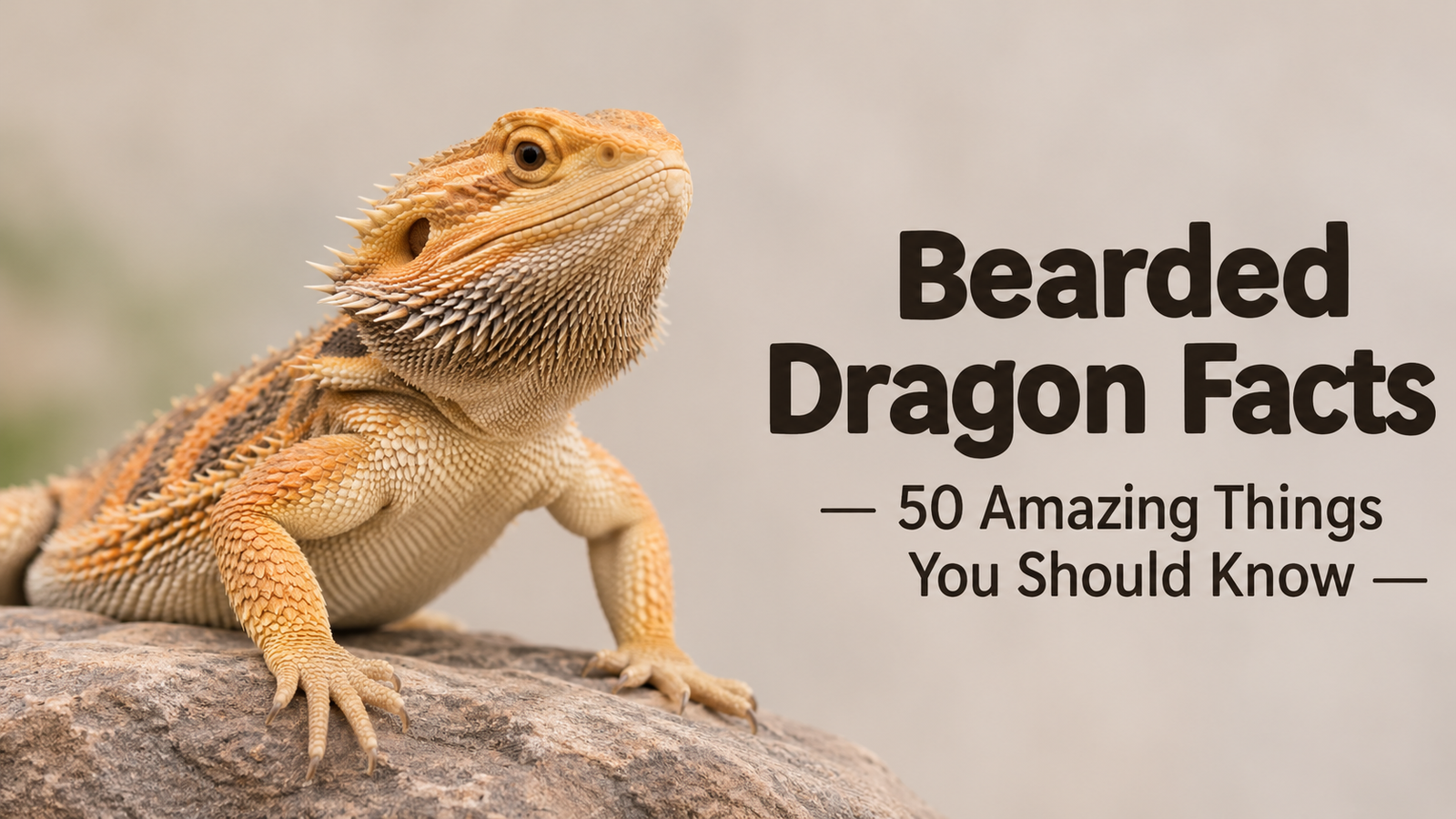

Imagine a lizard that can puff out its throat like a beard, change the colour of its skin, and even sense light through a tiny third eye on top of its head. Sounds unusual, right? That’s exactly what makes bearded dragons so fascinating. Native to Australia, these remarkable reptiles have some surprising abilities that go far beyond their spiky appearance.
They communicate through head movements, climb rocks and tree branches, hunt insects, and even use temperature to influence the development of their young. But there’s much more to discover about them.
From their unusual physical features to their eating habits, behaviour, and reproductive secrets, these 50 bearded dragon facts will show you just how interesting these little reptiles can be.
Bearded Dragon Quick Facts
| Feature | Information |
|---|---|
| Common name | Bearded dragon |
| Scientific genus | Pogona |
| Animal group | Reptiles |
| Family | Agamidae |
| Native country | Australia |
| Diet | Omnivorous |
| Activity | Diurnal |
| Typical adult length | Around 15–24 inches, depending on species |
| Natural habitat | Deserts, scrublands, savannas, and dry forests |
| Popular pet species | Central bearded dragon |
| Scientific name | Pogona vitticeps |
| Average lifespan | Around 7–10 years in captivity |
50 Amazing Bearded Dragons Facts
Appearance and Physical Features
Their Name Comes From Their Spiky Throat
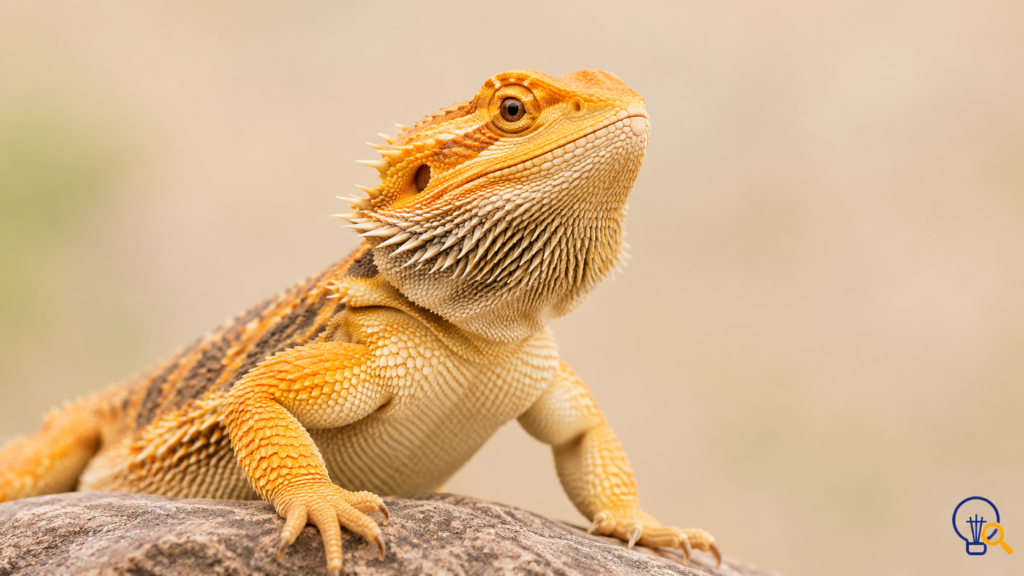
These reptiles get their common name from the pointed skin underneath their chins. This area resembles a beard, especially when they expand it. The display becomes more noticeable when they feel threatened or interact with other individuals.
They Have Flat, Triangular Heads
Their heads have a distinctive triangular shape that makes them easy to recognize. Combined with their wide bodies and short legs, this feature gives them an unusual appearance compared with many other lizards.
Their Bodies Are Covered in Spiky Scales
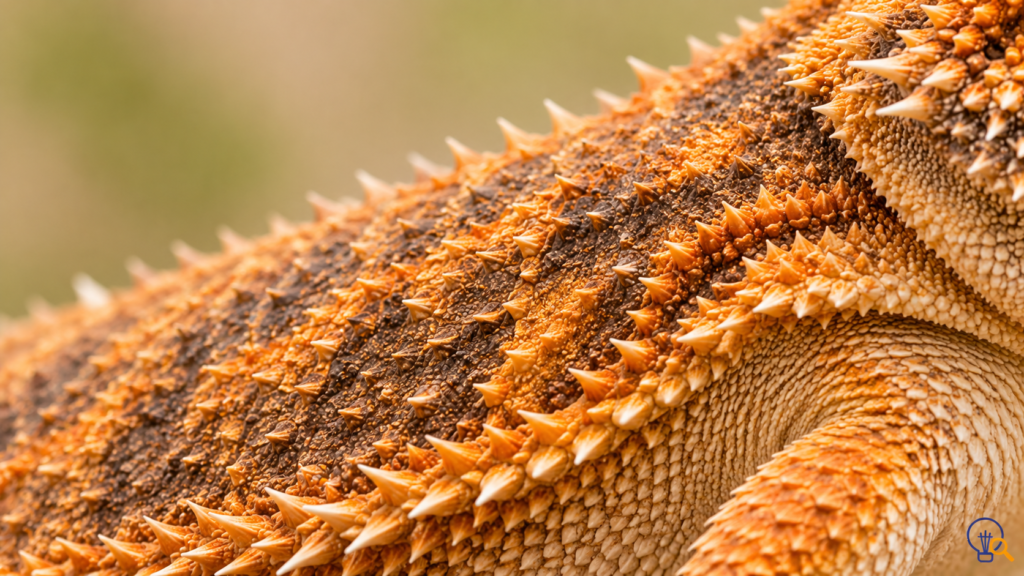
Unlike reptiles with smooth skin, these animals have rough scales with small spikes. The pointed structures appear around the neck, sides, back, and tail, creating their characteristic appearance.
They Can Make Their Beards Look Bigger
When they feel threatened, they can expand the skin around their throats. This makes the body appear larger and may discourage predators or competing animals from approaching.
Their Beards Can Turn Darker
The throat area can become much darker, sometimes appearing almost black. This colour change may occur during stressful situations, territorial displays, or social interactions.
They Have a Third Eye
A small light-sensitive structure sits on top of the head. Known as the parietal eye, it cannot form detailed images like ordinary eyes. Instead, it detects changes in light and helps regulate biological rhythms.
Their Tails Help With Balance
The long, muscular tail plays an important role in movement. It helps maintain balance while walking, climbing, and changing direction on uneven surfaces.
They Can Flatten Their Bodies
These reptiles can spread their bodies outward when basking. This increases the surface area exposed to sunlight and helps them absorb environmental heat more efficiently.
Their Colours Vary Between Individuals
Depending on the species and individual, their skin can display shades of brown, grey, yellow, orange, and red. Selective breeding has also produced additional colour varieties in captivity.
They Have Strong Jaws
Their jaws are powerful enough to crush different types of food, including insects with hard outer coverings. This allows them to consume a wider variety of prey.
Habitat and Natural Lifestyle
Australia Is Their Native Home
All naturally occurring species in the genus Pogona come from Australia. Different types occupy different regions, including central, eastern, and western parts of the country.
They Live in More Than Just Deserts
Although they are commonly associated with dry environments, their habitats are quite varied. They can be found in scrublands, rocky landscapes, savannas, and dry forests.
They Spend Time on Rocks and Tree Branches
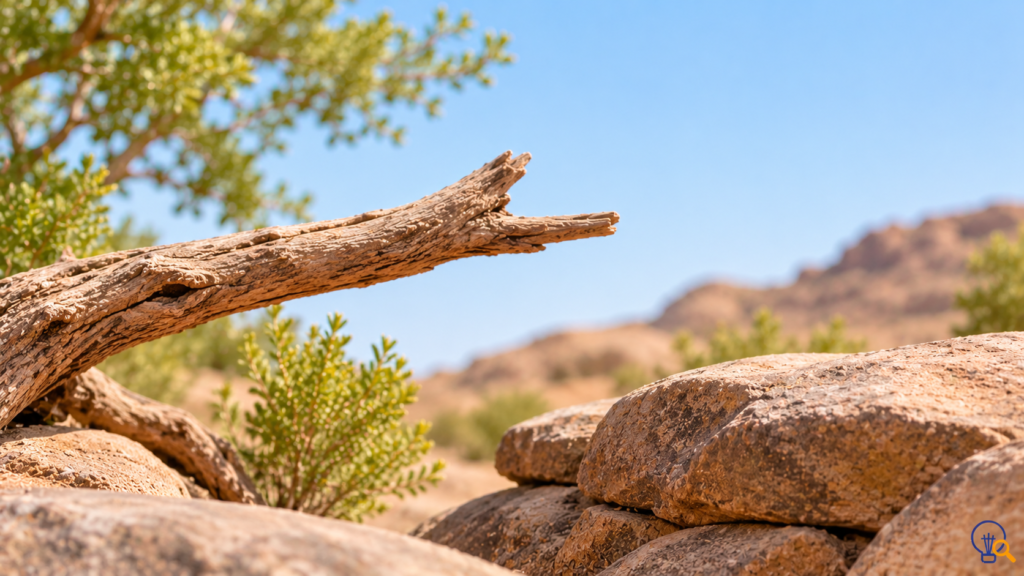
Climbing is a normal part of their daily activities. They often sit on rocks, fallen branches, and other elevated surfaces to absorb sunlight and observe their surroundings.
They Are Active During the Day
These reptiles are diurnal, meaning they are mainly active during daylight hours. They use this time to search for food, explore their surroundings, and regulate their body temperature.
They Depend on External Heat Sources
Unlike mammals, they do not maintain a constant internal body temperature. Instead, they rely on environmental heat to warm themselves and support normal body functions.
Sunbathing Helps Them Stay Warm
Basking is an essential part of their daily routine. They sit in sunny locations to absorb heat, which supports movement, digestion, and other important processes.
They Dig Underground Shelters
Digging provides protection from predators and uncomfortable temperatures. Underground spaces can offer a more stable environment during particularly hot or cold conditions.
They Can Climb Surprisingly Well
Despite having relatively short legs, these animals are capable climbers. They can move across branches, rocks, and other surfaces while searching for food or suitable resting locations.
They Prefer Areas With Both Sun and Shade
Their surroundings need to offer opportunities for warming up and cooling down. Moving between sunny and shaded places helps them control their body temperature.
They Can Survive in Harsh Environments
Their ability to use shelters, adjust their activity, and consume different food sources helps them survive in Australia’s challenging dry landscapes.
Food and Feeding Habits
They Are Omnivores
Their diet includes both animal-based and plant-based foods. Insects, leaves, flowers, and other vegetation provide different nutrients and help them take advantage of available food.
Young Individuals Usually Eat More Insects
Growing reptiles generally require a greater proportion of animal-based food than adults. Insects provide protein and other nutrients needed during development.
Adults Usually Consume More Vegetation
As they mature, plant material becomes a more important part of their diet. Mature individuals often consume leafy greens and other vegetation alongside insects.
They Eat Different Types of Insects
Their natural food can include beetles, termites, and various other insects. They are opportunistic feeders, meaning they take advantage of suitable prey whenever it becomes available.
They Can Eat Flowers
Flowers are another source of food. In the wild, they may consume edible blossoms when suitable plants are available in their surroundings.
They Sometimes Eat Small Animals
Depending on their size and available prey, they may consume small animals, including other lizards and rodents. However, these foods are not necessarily a regular part of every individual’s diet.
Their Strong Jaws Help Them Crush Beetles
Some insects have hard outer shells that can be difficult to consume. Their powerful jaws help break these coverings and make the food easier to swallow.
Their Diet Changes With Age
Food preferences and nutritional requirements change throughout their lives. Younger individuals generally need more insects for growth, while adults rely more heavily on plant material as part of their regular diet.
They Use Their Tongues to Catch Food
Their tongues help them pick up and move food into their mouths. They can quickly capture small prey, making insect feeding more efficient.
They Need a Varied Diet in Captivity
Pet owners must provide suitable vegetables, leafy greens, and appropriately sized insects. Nutritional requirements change with age, so a balanced feeding plan and veterinary guidance are important.
Behaviour and Communication
They Communicate Through Head Bobbing
Head bobbing is one of their most recognizable behaviours. Quick movements can communicate dominance, while slower movements may occur during other social interactions.
They Wave One of Their Front Legs
Sometimes, they lift one front leg and move it in a circular motion. This behaviour is known as arm waving and is commonly associated with submission or communication.
They Puff Up When They Feel Threatened
When frightened, they may expand their beard and body to appear larger. This defensive display can help discourage animals that might otherwise approach them.
They Sometimes Open Their Mouths While Basking
An individual may sit with its mouth open under a heat source. This behaviour, called gaping, can help regulate body temperature. However, persistent open-mouth breathing outside normal basking behaviour may indicate a health problem.
They Can Be Territorial
Some adults defend particular areas against members of their own species. Males may display aggressive behaviour when competing for territory or potential mates.
They Sometimes Experience Brumation
Brumation is a period of reduced activity that resembles hibernation. During this time, some individuals become less active and eat much less, often in response to seasonal environmental changes.
They Use Body Movements During Courtship
Males perform different movements to attract females. These displays may include head bobbing, arm waving, and foot stomping.
They Become Less Active in Cold Conditions
Temperature strongly influences their activity because they rely on external heat. When their surroundings become too cold, they may move less and spend more time in sheltered locations.
They Can Become Comfortable With Human Handling
Many captive-bred individuals gradually learn to tolerate gentle handling. Their generally calm temperament is one reason they are popular among reptile enthusiasts.
They Do Not Need Companions of Their Own Species
These reptiles are not naturally social in the same way as many mammals. They can display territorial behaviour, and keeping multiple individuals together may cause stress or injuries.
Reproduction and Life Cycle
Females Lay Eggs Instead of Giving Birth to Live Young
These reptiles are egg-laying animals. After mating, females develop eggs inside their bodies and eventually deposit them in suitable nesting locations.
They Can Lay Around 10 to 30 Eggs in One Clutch
A female may produce a substantial number of eggs at once. The exact number depends on the species, individual, and reproductive condition.
Their Eggs Develop Underground
Females often dig burrows to create suitable nesting places. These underground locations provide some protection from predators and extreme environmental conditions.
Eggs Usually Hatch After Several Weeks
Depending on incubation conditions and the species, eggs may take approximately 55 to 75 days to hatch. Temperature plays an important role in embryo development.
Baby Individuals Look Like Smaller Adults
Newly hatched young already have the familiar body shape, four legs, and spiny features of mature animals. Their main difference is their much smaller size.
They Grow Quickly During Their First Year
Young individuals experience substantial growth during early development. Their growth rate depends on genetics, nutrition, and environmental conditions.
Females Can Store Sperm
One unusual reproductive ability is sperm storage. Females can retain sperm after mating and use it to fertilize eggs later.
Temperature Can Influence Their Biological Sex
In central bearded dragons, unusually high egg-incubation temperatures can cause some genetically male embryos to develop as females. This is an unusual example of temperature influencing sex determination in reptiles.
Young Individuals Become Independent After Hatching
Females do not normally raise their offspring after laying eggs. Once the young hatch, they must find their own food and shelter.
Their Reproductive Behaviour Changes During Breeding Season
During breeding periods, males may become more territorial and perform courtship displays. These behaviours help them compete for mates and communicate with females.
Why Are Bearded Dragons So Popular as Pets?
These reptiles have become popular pets because many individuals are calm, curious, and relatively comfortable around people. Their daytime activity also makes it easier for owners to observe their behaviour.
However, owning one requires proper preparation. They need a suitably sized enclosure, appropriate heating, UVB lighting, a balanced diet, and regular veterinary care.
UVB lighting is particularly important because it helps the body produce vitamin D3, which supports calcium absorption. Owners should also provide suitable temperature gradients, climbing opportunities, and safe hiding places.
Before bringing one home, it is important to understand its long-term care requirements. A healthy environment, suitable nutrition, and regular monitoring can make a major difference to its quality of life.
Frequently Asked Questions About Bearded Dragons
Are bearded dragons friendly?
Many individuals have calm temperaments and can become comfortable with gentle human handling. However, their personalities differ, and they should always be handled carefully.
How long do they live?
They commonly live around 7 to 10 years in captivity with appropriate care. Some individuals may live longer depending on their genetics, health, and living conditions.
What do they eat?
They are omnivores. Their diet includes insects, leafy greens, vegetables, and occasionally suitable fruits and flowers. Younger individuals generally require more insects than adults.
Where do they come from?
They are native to Australia, where they inhabit dry forests, deserts, rocky areas, and scrublands.
Can they recognize their owners?
They can become familiar with regular caregivers and may respond to familiar routines and interactions. However, this should not be confused with human-style recognition or emotional attachment.
Why do they wave their arms?
Arm waving is a communication behaviour often associated with submission or recognition. A smaller individual may wave when interacting with a larger one.
Do they change colour?
Yes. They can change shades in certain areas of their bodies, including their beards. These changes may be connected to temperature, social communication, or emotional states.
Are they poisonous?
They are not considered dangerous to humans. Research has identified venom-related glands in the genus Pogona, but their venom is not considered a significant threat to people.
Can they swim?
They can move through water, and some may swim when necessary. However, they are primarily terrestrial reptiles rather than aquatic animals.
Do they sleep at night?
Yes. They are diurnal, meaning they are generally active during the day and rest at night.
Final Thoughts
Bearded dragons are remarkable reptiles with much more to offer than their unusual appearance. From their expandable beards and light-sensitive third eyes to their communication methods and interesting reproductive abilities, they have many characteristics worth exploring.
Their ability to adapt to dry Australian environments makes them fascinating animals in the wild. At the same time, their curious behaviour and generally calm temperament have made them popular pets around the world.
Whether you are an animal enthusiast, a student, or simply curious about wildlife, these 50 facts reveal why these unusual Australian reptiles deserve a closer look.
Learn more about how your body works by exploring these interesting facts about children and discovering the amazing functions of its different systems.
