

Goats are far more fascinating than they might look at first. These curious animals can climb seemingly impossible surfaces, recognize familiar faces, solve problems, and even have eyes unlike most other mammals. Their playful nature, unusual habits, and remarkable abilities make them much more interesting than many people realize. But that’s not all—some can remember how to solve tasks, find clever ways to escape enclosures, and explore their surroundings with surprising confidence.
From their incredible climbing skills and strange eating preferences to their intelligence, social behaviour, and unique physical features, there is a lot more to discover about these animals than meets the eye. Whether you’ve seen them jumping around on a farm or balancing on rocky mountain slopes, these goat facts will reveal just how intelligent, unpredictable, and extraordinary they really are.
Quick Facts About Goats
| Characteristic | Information |
|---|---|
| Scientific name | Capra hircus |
| Animal group | Mammal |
| Family | Bovidae |
| Diet | Herbivore |
| Natural ancestors | Wild goats |
| Average lifespan | Around 10–12 years |
| Pregnancy period | About 150 days |
| Body covering | Hair or coat |
| Special feature | Rectangular pupils |
| Main uses | Milk, meat, and fiber |
| Social behaviour | Usually live in groups |
| Young goats | Called kids |
Physical Features and Body Abilities
These animals have several physical characteristics that help them survive in different environments. Their eyes, hooves, horns, and flexible bodies make them excellent explorers.
Goats Have Rectangular Pupils
One of the most unusual features of a goat is its eyes. Unlike human eyes, they have horizontal rectangular pupils.
This eye structure gives them a wide field of vision, helping them notice movement around them. It is particularly useful for animals that need to remain alert to potential predators.
They Are Excellent Climbers
They are famous for their climbing abilities. Their strong legs and specially shaped hooves help them move across steep and rocky surfaces.
Some wild goats can climb almost vertical mountain slopes while searching for food or escaping danger.
Their Hooves Have Two Main Toes
Each animal has split hooves with two main toes. These provide balance and help it grip uneven surfaces.
The outer parts are hard, while the softer inner areas help improve contact with the ground.
Goats Come in Many Colours
These farm animals are not limited to white or brown coats. Depending on their breed, they can have black, red, cream, grey, spotted, or mixed-colour hair.
Some even have distinctive markings around their faces and legs.
Many Goats Have Beards
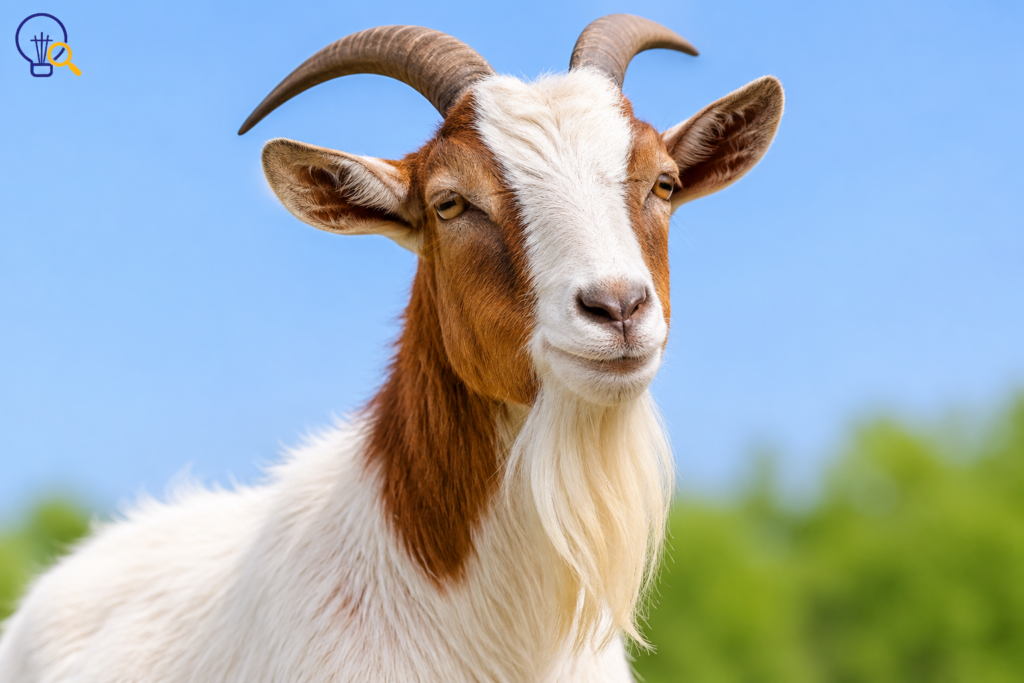
Both male and female goats can have beards, although they are more common in certain breeds and individuals.
These small patches of hair grow underneath the chin and give some of them a distinctive appearance.
They Can Have Curved or Straight Horns
Their horns vary considerably in shape and size. Some grow backward, while others curve outward or twist into interesting patterns.
Horns are used for defence and can also play a role in social interactions.
Some Have No Natural Horns
Not every goat grows horns. Certain animals are naturally hornless, a condition commonly called polled.
This characteristic is inherited and depends on genetics.
Goats Have Strong Legs
Their muscular legs help them climb, jump, run, and explore challenging terrain.
These abilities are especially valuable for wild goats living in mountainous regions.
Their Tails Point Upward
A goat’s tail is usually short and naturally points upward. This makes it different from the long, downward-hanging tails seen in some other livestock animals.
Some Can Jump Surprisingly High
Many goats are excellent jumpers. Depending on their size, age, and physical condition, some domestic goats can jump over obstacles more than five feet high.
Their powerful back legs help them perform these impressive movements, although their jumping height can vary from one animal to another.
Intelligence and Behaviour
These animals are often playful and curious, but their intelligence is just as interesting. Research shows that they can learn, remember information, and respond to human behaviour.
They Are Intelligent Animals
Goats are smarter than many people expect. They can learn through experience, recognize patterns, and solve certain problems.
Their ability to explore their surroundings helps them discover food and adapt to different environments.
They Can Remember How to Solve Problems
They have good learning and memory abilities. Research has demonstrated that goats can remember solutions to tasks after learning them.
This ability helps them repeat successful actions when they encounter familiar challenges.
They Are Naturally Curious
If you place an unfamiliar object near a goat, it may approach, sniff, and investigate it.
This curiosity is part of their natural behaviour. Exploring new objects helps them understand their surroundings.
They Can Learn to Open Simple Gates
Some goats learn how to operate simple latches and escape from enclosures.
They may watch how a gate works and gradually figure out how to open it. This is one reason why keeping them safely contained can sometimes be challenging.
They Enjoy Climbing Platforms
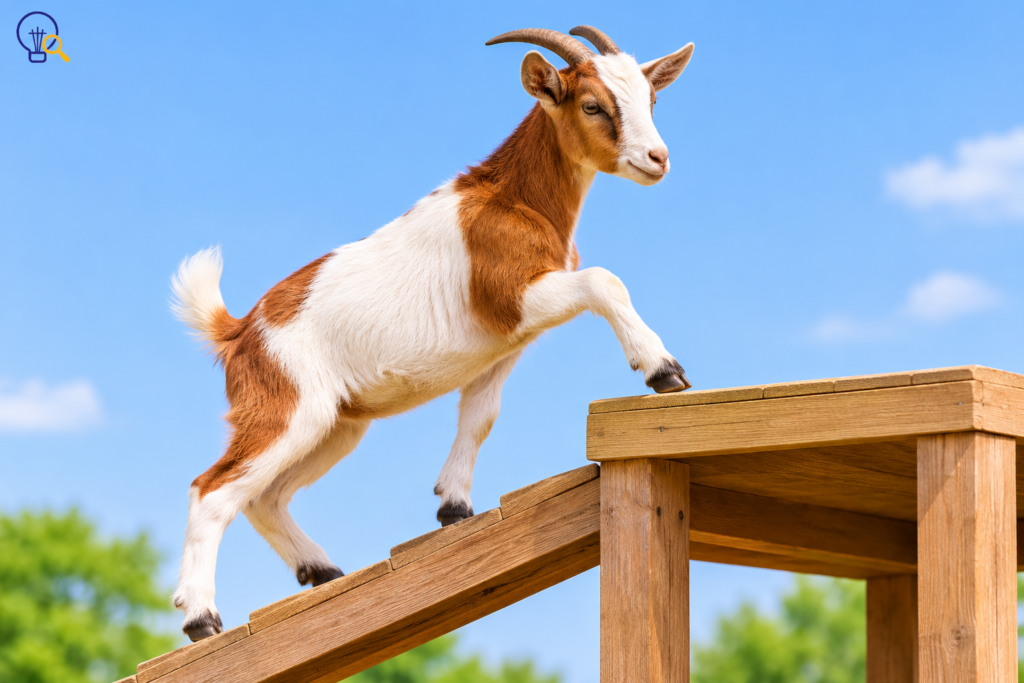
Climbing is not only a way to escape danger. Goats also enjoy exploring elevated surfaces.
They may climb rocks, wooden structures, platforms, and other safe objects when given the opportunity.
They Can Recognize Familiar Humans
Goats can recognize people they regularly interact with. They use visual and other sensory information to become familiar with their human handlers.
Some also seek attention from people they trust.
They Can Respond to Human Emotions
Research suggests that goats may be able to distinguish between certain positive and negative human facial expressions.
They can also use information from human voices when interacting with people.
These abilities suggest that they may be more socially perceptive than many people realize.
They Do Not Like Being Bored
Goats are active animals that enjoy exploring, climbing, and searching for food.
When their environment offers little stimulation, they may develop unwanted behaviours. Providing suitable activities helps keep them mentally engaged.
They Can Be Quite Stubborn
Anyone who has spent time around these animals may have noticed their independent nature.
They often prefer exploring their own way rather than following instructions. Their curiosity and confidence can make them difficult to manage.
Young Goats Love to Play
Baby goats, known as kids, are especially energetic. They often jump, run, chase one another, and explore their surroundings.
These playful activities help them develop coordination and physical strength.
Food, Digestion, and Eating Habits
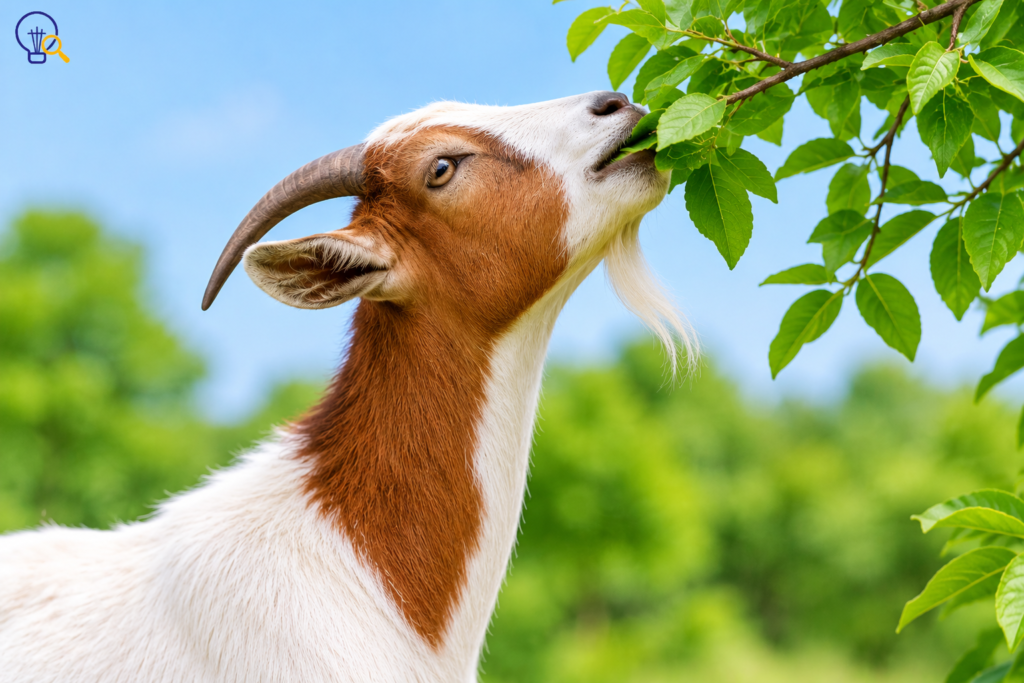
Their eating habits are quite interesting. Although many people think they eat almost anything, their actual feeding preferences are more selective.
Goats Are Herbivores
They mainly eat plant-based foods. Their natural diet includes leaves, grasses, shrubs, flowers, and other vegetation.
These animals are particularly good at finding different types of plants in their surroundings.
They Prefer Browsing Over Grazing
Unlike animals that mainly eat grass close to the ground, goats are natural browsers.
They often search for leaves, bushes, and branches at different heights. This behaviour allows them to use food sources that other livestock may ignore.
They Have Four Stomach Compartments
Goats are ruminants, meaning their stomachs contain four compartments:
- Rumen
- Reticulum
- Omasum
- Abomasum
Each compartment performs a different role in digestion, helping them process fibrous plant material.
They Chew Their Food Twice
These animals practise a process called rumination. After swallowing food, they bring partially digested material back into their mouths and chew it again.
This process is commonly known as chewing the cud and helps break down plant material more effectively.
They Can Eat Leaves From Bushes
Their browsing habits allow them to reach leaves and small branches.
They often stand on their hind legs to reach vegetation that grows above ground level.
They Have Strong Food Preferences
Despite their reputation for eating almost everything, goats are selective eaters.
They use their lips and tongues to choose suitable plants and may reject food that is dirty, unpleasant, or unfamiliar.
They Need Clean Drinking Water
Water is essential for digestion, body temperature regulation, and overall health.
The amount they need depends on factors such as weather, activity, body size, and whether they are producing milk.
They Have Special Teeth for Eating Plants
Goats have teeth adapted for processing vegetation. Their lower front teeth work against a tough dental pad in the upper jaw.
This arrangement helps them pull and cut plant material.
They Help Manage Some Types of Vegetation
Because they eat shrubs, weeds, and other plants, goats can be used for vegetation management.
Farmers and land managers sometimes use them to control unwanted plant growth in suitable areas.
They Do Not Actually Eat Everything
This is one of the biggest myths about these animals.
They may investigate unfamiliar objects by chewing or sniffing them, but they do not normally eat everything they encounter. Their diet should consist of appropriate, nutritious plant material.
Social Life and Communication
These farm animals are social and communicate through sounds, body movements, and scent. Their relationships with other herd members are an important part of their daily lives.
They Prefer Living in Groups
Most goats are naturally social and prefer having other goats around them.
Living in groups provides companionship and helps them remain alert to potential danger.
A Group of Goats Is Called a Herd
The word herd describes a group of goats living or moving together.
Within a herd, animals develop relationships and establish social positions.
They Communicate Through Bleating
Goats make different vocal sounds to communicate with one another.
Bleating can help mothers and babies find each other, while other sounds may express discomfort, excitement, or a desire for attention.
Mother Goats Recognize Their Babies
Female goats, known as does, develop strong relationships with their young.
They use sounds and scents to identify their kids, helping them maintain contact within a group.
They Establish Social Rankings
Herds often develop a social hierarchy. Some animals become more dominant, while others take lower positions.
These relationships can influence access to food, resting areas, and other resources.
They Use Body Language to Communicate
Goats communicate through more than sounds.
Head movements, posture, ear positions, and interactions with horns can provide information about their intentions and social relationships.
They Can Become Attached to Other Animals
Individual goats may form strong social bonds with particular herd members.
They often spend time near familiar companions and can become stressed when separated from their group.
They Use Smell to Gather Information
A goat’s sense of smell plays an important role in communication.
Scents can help them recognize other animals and gather information about their surroundings and reproductive condition.
Male Goats Are Called Bucks
An adult male goat is known as a buck. Male goats may have stronger body odours, particularly during the breeding season.
This smell is associated with their natural reproductive behaviour.
Female Goats Are Called Does
An adult female goat is called a doe. Does are responsible for giving birth and raising their young.
They also provide milk, which is an important agricultural product.
Reproduction, Breeds, and Interesting Facts
These animals have an interesting reproductive cycle, and different breeds have been developed for various purposes. Some produce milk, while others are raised for meat or valuable fibers.
Baby Goats Are Called Kids
A young goat is known as a kid.
Newborn kids can stand and begin walking shortly after birth. They gradually become stronger as they grow and explore their surroundings.
Their Pregnancy Lasts About Five Months
The average pregnancy period for a goat is approximately 150 days.
The exact duration can vary slightly depending on the animal and other factors.
They Can Give Birth to Twins
Although a doe may give birth to a single kid, twins are also common.
Some goats can even have triplets, depending on their breed, genetics, and reproductive condition.
Different Breeds Serve Different Purposes
Goats are raised for several agricultural products.
The main categories include:
- Dairy goats for milk production.
- Meat goats for meat production.
- Fiber goats for valuable natural fibers.
Some breeds can serve more than one purpose.
Boer Goats Are Popular Meat Animals
Boer goats are well known for their meat production. They originated in South Africa and are recognized by their large bodies and commonly white coats with reddish-brown heads.
Angora Goats Produce Mohair
Angora goats are famous for producing mohair, a natural fiber used in clothing, fabrics, and other textile products.
Their long, curly coats give them a distinctive appearance.
Nigerian Dwarf Goats Are Very Small
Nigerian Dwarf goats are a small dairy breed. Despite their size, they can produce a useful amount of milk.
They are also popular among small-scale farmers and hobby livestock owners.
Some Produce Cashmere
Cashmere goats produce a soft undercoat that can be collected and used to make cashmere fiber.
This material is valued for its softness, warmth, and lightweight feel.
They Have Been Domesticated for Thousands of Years
Goats have a long history of living alongside humans.
They were among the earliest livestock animals to be domesticated, providing people with milk, meat, skins, and other useful resources.
They Live in Many Different Environments
Domestic goats are raised in different parts of the world, including mountains, grasslands, farms, and dry regions.
Their ability to browse different vegetation and adapt to varied conditions has made them valuable livestock animals.
Frequently Asked Questions
Are goats intelligent animals?
Yes. Goats are intelligent animals with good learning and memory abilities. They can solve certain problems, recognize familiar people, and learn from experience.
What do goats eat?
Goats mainly eat leaves, grass, shrubs, flowers, and other vegetation. They are selective browsers and need a balanced diet to remain healthy.
How long do goats live?
Many domestic goats live around 10–12 years, although their lifespan can vary depending on breed, genetics, nutrition, and care.
Why do goats have rectangular pupils?
Their horizontal rectangular pupils provide a wide field of vision. This helps them monitor their surroundings and notice possible danger.
What is a baby goat called?
A baby goat is called a kid. Newborn kids can stand and begin walking shortly after birth.
How long are goats pregnant?
A goat’s pregnancy usually lasts approximately 150 days, or around five months.
Do goats recognize their owners?
Yes. Goats can recognize familiar humans and may develop positive relationships with people who regularly care for them.
Why do goats climb mountains?
Goats climb to find food, explore their surroundings, and avoid predators. Their strong legs and specially adapted hooves help them move across rocky surfaces.
Do goats have four stomachs?
Goats have one stomach divided into four compartments: the rumen, reticulum, omasum, and abomasum.
Are goats friendly animals?
Many goats are friendly, curious, and social. However, their personalities vary depending on breed, individual temperament, and how they are raised.
Final Thoughts
Goats are much more fascinating than they might appear at first. From their unusual eyes and impressive climbing abilities to their intelligence and strong social relationships, these animals have plenty of remarkable characteristics.
They have also played an important role in human life for thousands of years, providing milk, meat, and natural fibers to communities around the world.
Whether you see them on a farm, climbing a rocky hill, or playing with other animals, there is always something interesting to discover about goats. Hopefully, these facts have helped you appreciate just how special these curious creatures really are!
