

You open a blank text, and the words just won’t come. Sound familiar? Finding the right message for someone who passed away is one of the hardest things to write, and one of the most meaningful. Grief is hard enough without worrying about wording.
Whether you want to comfort a grieving family or speak directly to a loved one you lost, you’ll find words for both here: 50+ ready-to-use words of comfort, from short texts to heartfelt sympathy notes. You’ll also learn a simple way to personalize any condolence message. No poetry required. Let’s start with what to say, and why sincere words matter more than perfect ones.
Quick answer: A good message for someone who passed away is short and sincere. Acknowledge the loss, mention the person by name, and offer support. For example: “I’m so sorry for your loss. [Name] meant so much to so many people, and I’m thinking of you. I’m here whenever you need me.”
Finding the Right Message for Someone Who Passed Away

Most problems have a fix. Grief doesn’t, and that’s why the words feel so heavy. You can’t take the pain away, so you worry that anything you say will fall short.
It will fall short, in the sense that no sentence can undo a loss. But that’s not the goal. The goal is to let someone know they’re seen and not alone.
Many people stay silent because they’re afraid of saying the wrong thing. Many grieving people say that silence hurts more than a clumsy message. A simple “I’m thinking of you” is almost never wrong.
Here’s a quick note on terms. You’ll see “sympathy” and “condolence” used side by side. In simple terms, sympathy is the feeling of sorrow for someone’s loss. A condolence is how you express that feeling to the person who is grieving. A condolence message is just sympathy put into words.
Comforting Words for the Grieving Family
This kind of message is for friends, coworkers, neighbors, and relatives who want to support the bereaved. Your goal is simple: acknowledge the loss, express sympathy, and show you’re present.
A few quick examples:
“I’m so sorry for your loss. I’m thinking of you and your family.”
“I heard about your grandmother, and my heart is with you. I’m here whenever you need me.”
“There are no perfect words, but please know you’re not alone in this.”
You’ll find many more tailored messages in the sections below.
Heartfelt Words Written to the One You Lost
Some people aren’t looking for what to say to the family. They want to say something to the person who died. Maybe it’s a note at a grave, a journal entry, a message on a birthday, or a letter written on the hardest night.
Writing to someone who has died can be a gentle way to honor their memory, say the things that are still unsaid, and begin some healing. It gives your feelings somewhere to go. Many people find it eases the weight a little, even though nothing changes in the outside world.
If that’s what you came here for, skip ahead to “Heartfelt Messages to a Loved One in Heaven.” You’ll find birthday messages, grave notes, and a simple guide to writing a letter you never got to send.
How to Write Words That Truly Comfort
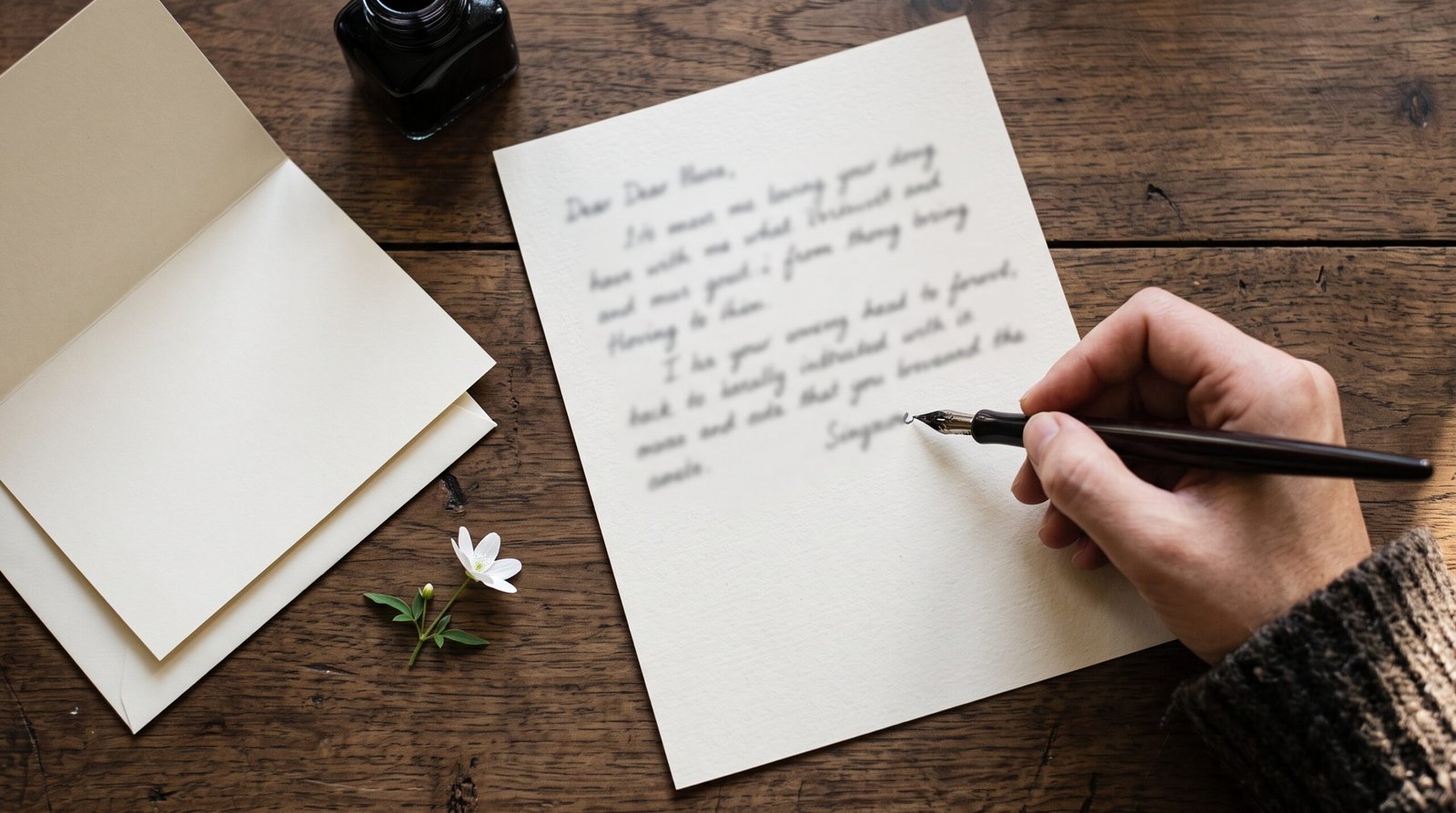
You don’t need to be a writer. Most good condolence messages follow the same simple pattern, and once you know it, you can write your own in a few minutes.
The 3-part formula:
- Acknowledge the loss. Say you’re sorry, and name the person if you can.
- Share a memory or quality. Mention something you remember or admired about them.
- Offer support. Make a small, specific offer, or simply say you’re thinking of them.
Here’s how it looks in practice.
Before (generic):
“Sorry for your loss. Let me know if you need anything.”
After (personal):
“Maria, I’m so sorry about your dad. I’ll never forget how he waved at everyone from his porch. I’m dropping off dinner Thursday and will leave it by your door, so you don’t have to come down.”
Both messages are kind. The second one tells Maria that someone noticed her dad, and that someone is going to take a small task off her plate.
Keep It Simple and Sincere
Short usually beats elaborate. When people are grieving, they’re tired, and they may read your message in a daze. A few warm sentences are easier to take in than a long paragraph.
“I’m so sorry for your loss” works because it’s honest and complete. It doesn’t try to explain, fix, or compare. Keep the focus on the griever, not on yourself or on finding the perfect phrase. If you speak from the heart instead of trying to sound poetic, you’ll usually land in the right place.
Add a Personal Touch
Use the person’s name. Share a short memory, or mention something you admired. “I’ll always remember how Tom made everyone feel welcome at team lunches” means far more than “He was a great guy.”
What if you never met the person who died? That’s very common, especially with coworkers. You can still write something meaningful:
Mention how much the griever means to you.
Share what you’ve heard about the person: “I know how close you were to your mom.”
Keep it simple and avoid pretending you knew them.
Offer Help That Is Specific
“Let me know if you need anything” is kind, but it puts the work on the griever. They have to figure out what they need, decide whether to ask, and risk feeling like a burden. Many people won’t take you up on it.
Specific offers are easier to accept. A few ideas:
“I’m bringing dinner on Wednesday. Any food allergies?”
“I can pick up the kids from school this week.”
“I’ll handle phone calls to the insurance office if you’d like.”
“I’m mowing your lawn on Saturday, no need to be home.”
“I’ll walk your dog every morning this week.”
“I’m going to the grocery store. Text me a list.”
Short and Sweet Condolence Messages

Sometimes you only have a minute, or you’re writing a text. These short messages work for almost any loss, and each one is a simple way to send heartfelt condolences. A short, sincere line is often the most meaningful message for someone who passed away, or for the people left behind. Add the person’s name when you can, such as “I’m so sorry about Grace,” to make them more personal.
- “I’m so sorry for your loss. You’re in my thoughts.”
- “My deepest sympathies to you and your family.”
- “I’m here whenever you want to talk, or just sit in silence.”
- “Thinking of you today and every day this week.”
- “I don’t have the right words, but I’m with you.”
- “Sending you love and strength during this heartbreaking time.”
- “They will be so missed. My heart aches for you.”
- “Reach out only when you’re ready. I just want you to know I care.”
- “Please accept my sincere condolences.”
- “Wishing you comfort and peace in the days ahead.”
Tip: Mix formal and warm. Numbers 2 and 9 suit coworkers or acquaintances. Numbers 3, 5, and 8 feel better coming from a close friend or relative.
Condolence Messages for the Loss of a Parent (Mom or Dad)

Losing a parent changes your place in the world at any age, even when the loss was expected. Name the loss plainly and let the memories carry the comfort. If you knew them, a message that celebrates the life rather than dwelling on the death often lands softly.
For a mother:
“Your mom’s warmth reached everyone she met. I’m thinking of you and wishing you comfort.”
“Losing your mom is losing someone who knew you from the very beginning. I’m here, whether you want company or quiet.”
For a father:
“Your dad was one of the kindest men I’ve known. He’ll be missed by so many.”
“I keep thinking about how proud your dad was of you. You’re in my thoughts.”
For either parent:
“I’m so sorry about your mom/dad. I’m with you, whatever today looks like.”
“I never had the chance to meet your mom/dad, but I can tell they raised someone remarkable. I’m so sorry for your loss.”
A note on complicated relationships: Not every parent-child relationship was easy. If you know the relationship was strained, keep your message neutral and supportive: “I’m here for you, whatever you’re feeling.” Avoid praising the parent in ways that might not match the griever’s experience.
Sympathy Messages for the Loss of a Spouse or Partner
Losing a husband, wife, or partner means losing a daily companion and a shared future. Speak to the love they shared, and skip any attempt to find a silver lining.
“I’m so sorry about Daniel. The love between you two was something special. I’m here for you.”
“I can’t imagine how much you’re hurting. Please know I’m thinking of you, and I’m just a call away.”
“You and Sarah brought so much joy to everyone around you. My heart is with you.”
For older adults: “After so many years together, I know how deep this loss runs. I’d love to stop by this week, if you’d like company.”
For an unmarried partner: “I know how much Alex meant to you. Your love was clear to everyone. I’m here for you.”
Tip: Avoid phrases like “You’ll find someone again” or “At least you had so many years together.” Even when meant kindly, they can feel like they shrink the loss.
Condolence Messages for the Loss of a Child
This is the hardest message most people ever write. There’s no way to make it easy, and nothing you say will take the pain away. That’s okay. Keep it short, soft, and honest. Never try to explain the loss or find a reason.
Use the child’s name if you know it. Hearing that name matters to parents.
“There are no words for this. I’m so sorry about Lily. We’re holding you both in our hearts.”
“Our hearts are broken for you. Lily was so loved, and she will always be remembered.”
“My heart aches for you both. We’re here for anything you need, big or small.”
“Thinking of you and your family. Ben brought so much light to everyone who knew him.”
“I can’t imagine your pain. I’m here, and I’m not going anywhere.”
Miscarriage and Infant Loss
Many people search for words after a miscarriage or the death of a baby, and it’s a loss that often goes unnamed. Parents may have had little time to share the news, which makes the grief lonelier. A few ways to respond:
“I’m so sorry about your baby. Your loss matters, and so do you.”
“I’m thinking of you both. Take all the time you need, and I’m here whenever you want to talk.”
Avoid “You can try again” or “It wasn’t meant to be.” Those phrases skip over the grief that’s happening right now.
For parents who’ve lost a child, peer support can help later on. Groups like The Compassionate Friends connect bereaved families with others who’ve been through something similar.
Kind Messages for the Loss of a Sibling or Grandparent
These losses are often overlooked. When a sibling dies, much of the attention goes to the parents or the spouse. When a grandparent dies, people may assume it’s “expected.” Yet both can be deeply painful.
Condolence Messages for the Loss of a Sibling
“Your brother was such a big part of your story. I’m so sorry. I’m here for you.”
“Losing a sister is losing someone who shared your whole life. I’m thinking of you.”
“I know you’re often the one holding everyone else together. Please let me hold you up for a bit.”
Tip for siblings: Address them directly. A sibling can feel invisible at the funeral. A message like “I’m thinking of you, not just your family” tells them their grief counts.
Condolence Messages for the Loss of a Grandparent
A grandparent’s legacy often shows up in small things: recipes, sayings, a certain way of laughing. If you can, mention one.
“Your grandma’s love for you was so clear. I’m so sorry for your loss.”
“I know how close you were to your grandfather. His stories and warmth will stay with you.”
“Your grandmother sounds like she was an amazing woman, and she raised an amazing family. I’m sorry she’s gone.”
Condolence Messages for a Friend or Coworker

Losing a friend or coworker can leave a quiet, confusing kind of grief, especially when you’ve seen someone nearly every day. You may be writing to the person’s family, or to a friend who’s grieving them. If you’re close, you can offer to be a shoulder to cry on without pushing them to talk.
To a grieving friend:
“I’m so sorry about Jess. I know how close you were. I’m here whenever you want to talk or just sit together.”
“Losing a friend like that is a real loss. Please be gentle with yourself.”
“Jess was lucky to have you, and you were lucky to have her. I’m thinking of you.”
For workplace situations:
“I’m so sorry about your loss. Please take whatever time you need. We’ve got things covered here.”
“Thinking of you and your family. Don’t worry about work. We’re here when you’re ready.”
“Our team was shocked and saddened to hear about Mark. Please accept our sincere condolences.”
Workplace tip: Keep your message professional but warm. Avoid asking about return dates or deadlines, and don’t pressure anyone to “stay busy” at work.
Example of a group message from a team:
“Dear Priya, all of us on the marketing team are thinking of you and your family. We’re so sorry about your father. Please take as much time as you need. We’ll handle things here, and we’re ready to help in any way.”
Condolence Messages for the Loss of a Pet
For many people, a pet is family. The grief is real, and it deserves the same kindness. Name the pet if you know it, and keep your message warm and simple.
“I’m so sorry about Max. He was such a good boy, and he was so loved.”
“Losing a pet means losing a daily companion. I’m thinking of you and wishing you comfort.”
“Max was lucky to have you. I’m here if you want to talk, or just share a favorite memory of him.”
Avoid “It was just a pet” and “You can always get another.” Both can make the loss feel smaller than it is.
What to Say After a Sudden or Unexpected Loss
Accidents, heart attacks, and sudden illnesses leave people in shock. Say you’re stunned and sorry, and leave the questions for another day.
“I’m so shocked and heartbroken to hear this. I’m here for you.”
“I can’t believe it. I’m thinking of you and holding you close.”
“There are no words for something this sudden. I’m here, whatever you need.”
“This loss is unimaginable. I just want you to know I care.”
What to avoid:
Don’t ask “What happened?” The family may be tired of retelling it, or not ready to talk.
Don’t speculate about the cause or suggest it could have been prevented.
If the death was from suicide or an overdose, don’t ask about the cause. Keep your message loving and neutral, and focus on the person’s life and the people left behind.
People in the first days after a sudden loss often feel numb. They may not reply, or may seem distant. That’s normal. A simple, steady presence, like a text that asks nothing of them, is enough.
Heartfelt Messages to a Loved One in Heaven

Not every message for someone who passed away is meant for the family. Some are meant for the person who died. Writing to someone who has died can feel strange at first, but it helps many people. Putting feelings into words can make them easier to carry, and it supports healing by keeping a sense of connection. You don’t have to believe anything specific to try it.
Birthday and Anniversary Messages
Birthdays, death anniversaries, and holidays can hit hard. A short message can mark the day and serve as a small tribute to their legacy.
“Happy birthday, Dad. I wish you were here to blow out the candles. I still hear your laugh.”
“It’s been a year today. I miss you more than I can say, and I’m carrying you with me.”
“Merry Christmas, Mom. Your recipes are on the table this year, and so is a little piece of you.”
Small rituals can help, too. Light a candle, visit the grave, cook their favorite meal, or play a song they loved. Choose something simple that feels right to you.
“I Miss You” Words for a Grave or Memorial
These short messages work for a card left at a headstone, a memorial page, or a quiet note.
“Missing you today and always.”
“Still your girl, still thinking of you every day.”
“You’re gone from my sight, but never from my heart.”
Letters You Never Got to Send

An unsent letter is exactly what it sounds like: you write to the person who died and don’t send it anywhere. You can keep it, read it at the grave, or tuck it into a journal. There are no rules.
If you’re not sure how to begin, try this four-step prompt:
- Say hello. Start the way you’d begin a normal conversation.
- Share what you miss. Be specific, such as their voice, their jokes, or Sunday calls.
- Say what you never said. This might be thank you, I’m sorry, or I love you.
- Say goodbye for now. You don’t need to say goodbye forever.
Sample paragraph:
“Hi, Grandpa. It’s been a rough few weeks. I keep reaching for my phone to call you about the game. I never told you how much those Saturday mornings at the diner meant to me. Thank you for all of it. I’ll talk to you again soon.”
Faith-Based Messages of Hope and Peace
For some people, faith is the main source of solace during loss. A spiritual message can feel warm and meaningful, as long as it fits the family’s beliefs.
Christian: “Praying that God’s peace and comfort surround you and your family during this time.”
Jewish: “May their memory be a blessing. Thinking of you and your family.”
Muslim: “Inna lillahi wa inna ilayhi raji’un (we belong to God, and to Him we return). May Allah grant them peace and give you strength.”
General spiritual: “May love carry you through this time, and may you feel the peace of knowing how deeply they were loved.”
General spiritual: “Holding you in my heart and sending you light as you grieve.”
A caution: Match your message to what you know of the family’s beliefs. If you’re unsure, a general message about love and peace is the safest choice. Sending a religious message to someone who isn’t religious can feel awkward or even hurtful.
As for “thoughts and prayers,” it’s a common phrase, and for many people it’s genuinely comforting. But it can also feel generic. If you want your message to feel warmer, add something personal: “Thinking of you and praying for your family. I’ll never forget Ellen’s kindness at our last neighborhood barbecue.”
Text, Card, Email or Letter: What Works Best

The same words can feel different depending on how you send them. This quick comparison can help you choose.
| Format | Best for | Ideal length | Timing |
| Text | Close friends, quick first contact, younger relatives | 1–3 sentences | Right away |
| Sympathy card | Family, coworkers, neighbors, anyone you’d like to send something lasting | 2–5 sentences | Within the first 1–2 weeks |
| Handwritten letter | Close relationships, or when you have a meaningful memory to share | A few short paragraphs | Within the first weeks, though it’s never too late |
| Coworkers, distant relatives, people you can’t reach by mail | 3–5 sentences | Within a few days | |
| Social media comment | Acquaintances, or a public tribute alongside a private note | 1–2 sentences | After the family has shared the news |
| Funeral flower note | Anyone sending flowers | 1–2 short lines | With the flower order |
Condolence Text Messages
Texting is usually fine for close friends, relatives, and quick first contact. It’s low pressure, and the person can reply when they’re ready, or not at all. Keep it short, and follow up later with a call, card, or visit when the relationship calls for it.
Two text-ready examples:
“I just heard about your mom. I’m so sorry. Thinking of you. No need to reply.”
“My heart is with you today. I’m here whenever you want to talk, or if you’d like me to bring dinner.”
Sympathy Cards and Letters
A handwritten note carries weight. It’s something a person can hold, and some people keep these cards for years and reread them. You don’t need to write a lot.
A simple structure for a card or letter:
- Name the person who died.
- Express your sympathy.
- Share a short memory or something you admired.
- Offer help, ideally something specific.
- Close warmly, with something like “With love” or “Thinking of you.”
Try to send it within the first couple of weeks. But if you miss that window, don’t let it stop you. A card that arrives a month or two later can mean a great deal, since some people feel everyone else has moved on while they’re still deep in grief.
Belated Condolence Messages
Running late happens, and it doesn’t make your message less welcome. Keep it short, skip the long apology, and say you’ve been thinking of them. One line of acknowledgment is enough.
“I’m sorry I’m late reaching out. I’ve been thinking of you, and I was heartbroken about Dan.”
“I wish I’d written sooner. You’ve been in my thoughts since I heard about your mom.”
“It’s never too late to say this: your dad mattered, and so do you. I’m here whenever you want to talk.”
Condolence Messages on Social Media
If the family hasn’t posted about the death yet, wait. Let them share the news first. Once they have, a short, kind comment is fine. For anyone you’re close to, send a private message too.
“Thinking of you and your family. Sending love.”
“What a beautiful life. Grateful to have known her.”
“Rest in peace, Coach. You changed so many lives.”
Skip the questions about what happened, and avoid long personal stories in the comments unless the family invites them.
Emails and Funeral Flower Notes
Email works well for coworkers, distant relatives, or people whose address you don’t have. Keep it simple, use a gentle subject line like “Thinking of you,” and avoid long forwarded chains or group-reply threads.
Flower cards have limited space, so short is the rule. Three options:
“With deepest sympathy and love.”
“Thinking of you and your family in this difficult time.”
“In loving memory of a wonderful person.”
What to Say at a Funeral or Visitation
Paying respects in person can feel more intimidating than writing a note. The good news is that families expect short, quiet words at a funeral home, memorial service, or celebration of life. A little compassion goes a long way, and you don’t need a speech.
A few lines that work:
“I’m so sorry for your loss.”
“Carol was such a kind person. I’ll miss seeing her.”
“I’m thinking of you and your family today.”
“He touched so many of us. Thank you for sharing him with us.”
“I’m here for you. Call me whenever you need anything.”
If the family doesn’t know you, say how you knew the person: “I’m Sam. I worked with Linda for six years, and she made every Monday easier.”
In a receiving line, keep it brief, around twenty seconds. Offer a handshake or hug, say one kind sentence, and move on so others can speak too. Skip questions about the cause of death. If you have a longer story, save it for a card or a conversation later.
Words to Avoid When Someone Is Grieving
Most people who say these things mean well. They’re trying to comfort. But some phrases can sting, because they minimize the loss, rush the person, or point toward what the griever “should” feel. A little empathy goes further than advice.
| Instead of this | Why it can hurt | Try this |
| “I know how you feel.” | Every loss is different, and it can shift the focus to you. | “I can’t imagine how hard this is, but I’m here.” |
| “Everything happens for a reason.” | It can make the loss feel explained away or even blamed. | “This is so unfair, and I’m so sorry.” |
| “They’re in a better place.” | It may not match the family’s beliefs, and it can sound like a reason not to grieve. | “I’m thinking of you and your family.” |
| “At least they lived a long life.” | It suggests the pain should be smaller. | “I know you’ll miss them deeply.” |
| “You need to be strong.” | It pressures people to hide their feelings. | “It’s okay to feel whatever you’re feeling. I’m here.” |
| “Time heals all wounds.” | It can feel like a push to get over it quickly. | “Take all the time you need. I’m not going anywhere.” |
| “They were so young.” | It can reopen the pain of what was lost. | “Their life mattered so much.” |
One more thing: keep the focus on the griever. A short comparison like “I lost my dad last year, so I get it” can pull attention away from them. If you want to share your experience, do it later in a conversation, once they’ve had space to talk.
Beyond Words: Simple Ways to Show You Care
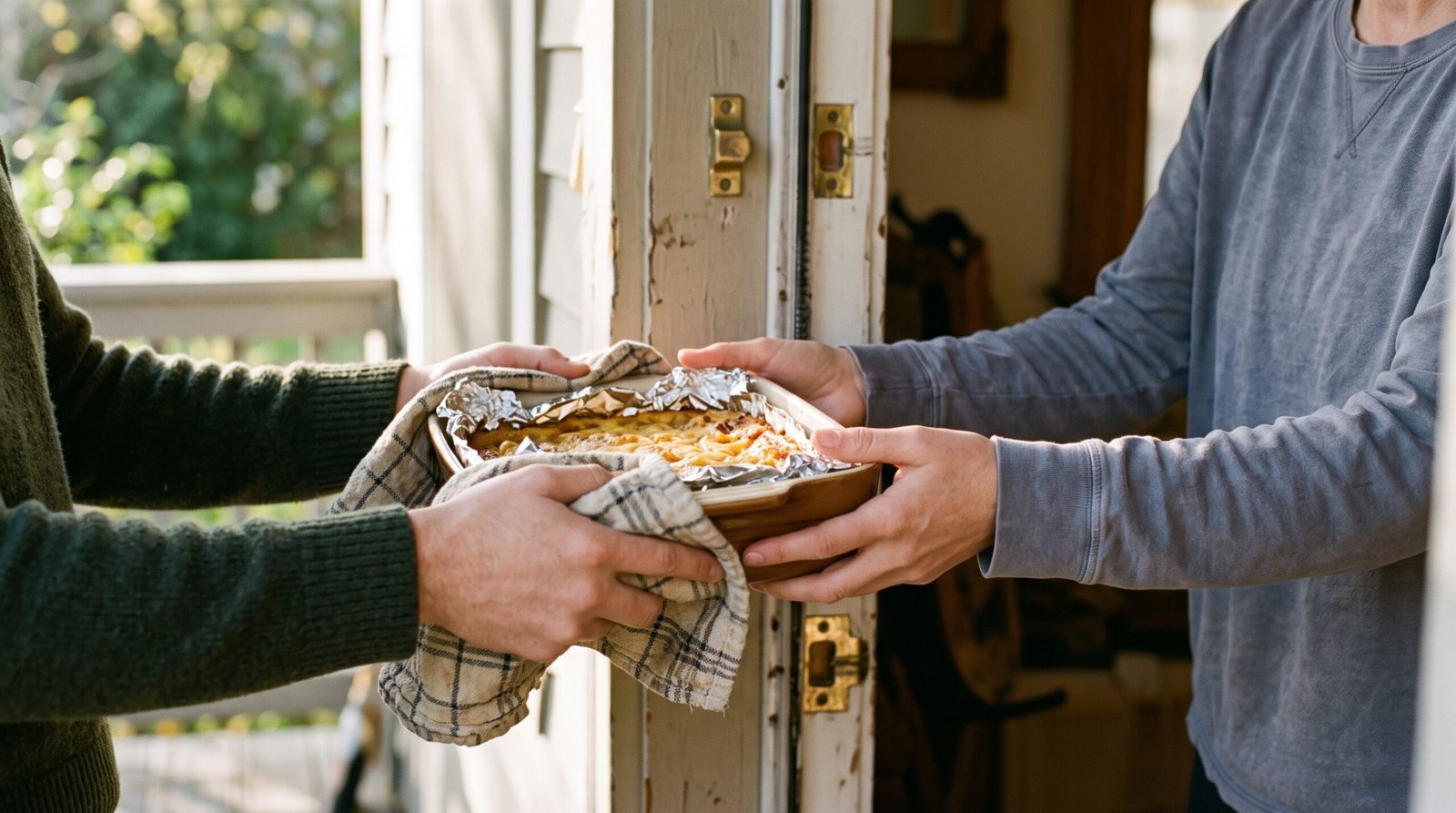
Words matter, but grieving people often need practical help even more. A message can open the door, and a small action can show you meant it.
Practical Gestures That Make a Difference
Offering support works best when it’s concrete. The most helpful gestures are often the least dramatic. Think about what a person might be too overwhelmed to handle:
Meals: Drop off dinner in a disposable container, so there’s nothing to return.
Errands: Offer to pick up groceries, prescriptions, or dry cleaning.
Childcare: Take the kids for an afternoon, or help with school runs.
Pet care: Walk the dog, feed the cat, or clean the litter box.
Paperwork: Offer to help sort mail, or organize thank-you notes later.
As for memorial gifts, a small gift like a framed photo, a candle, a plant, or a donation to a cause the person cared about can be thoughtful. Keep it simple, and match it to your relationship. If you’re not sure, a card with a sincere note is always enough.
Checking In Weeks and Months Later
Support can fade after the funeral, when the casseroles stop and everyone returns to normal life. For the griever, that’s often when the quiet and the weight set in. Helping someone navigate grief over the long run means showing up after the crowd has gone. It also gives them room to lean on loved ones when they’re ready.
Put a few dates in your calendar:
One month after the loss
The person’s birthday
The anniversary of the death
The first holidays without them
Three simple follow-up messages:
“I’ve been thinking of you. No need to reply. I just wanted you to know.”
“Today would have been Anna’s birthday. I’m thinking of you and remembering her.”
“How are you doing this week? I’d love to bring coffee, if you’re up for company.”
Grief looks different for everyone, and there’s no set timeline. But if someone seems stuck, struggles to function for a long stretch, or says they feel hopeless, gently suggest more grief support. In the U.S., options include hospice bereavement programs (many are open to the wider community, not just families of hospice patients), local or faith-based grief groups such as GriefShare, the resources at CaringInfo from the National Hospice and Palliative Care Organization, and licensed counselors or therapists.
If someone talks about not wanting to live, encourage them to call or text 988, the 988 Suicide & Crisis Lifeline, or stay with them while they reach out. If you believe they are in immediate danger, call 911.
Final Thoughts: Small Words, Lasting Comfort

Whether you’re writing a message for someone who passed away or comforting the family they left behind, you don’t need perfect words. You need honest ones. A sincere “I’m so sorry, and I’m here” can carry more weight than the most beautiful paragraph, because it comes from someone who cared enough to reach out.
Pick one message from this article, make it your own with a name or a memory, and send it today. Then, if you can, check in again a few weeks from now. Those small, steady gestures are often what people remember most.
If you’re still stuck, start with this and change the details:
“[Name], I’m so sorry about [loved one’s name]. [He/She/They] meant a lot to so many people, and I’ll always remember [short memory]. I’m thinking of you, and I’m here whenever you want to talk.”
Frequently Asked Questions
What is the best message for someone who passed away?
The best message for someone who passed away is one you’d actually say out loud: “I’m so sorry for your loss. I’m thinking of you and your family, and I’m here if you need anything.” It acknowledges the loss, shows care, and asks nothing in return.
Is it okay to send condolences by text?
Yes, in most cases. A text is a low-pressure way to reach out, especially to close friends and younger relatives. After the loss of a spouse, parent, or child, or when you’re very close, follow up with a call, card, or visit.
What should I say when I don’t know what to say?
Be honest: “I don’t have the right words, but I’m here for you, and I’m so sorry.” Grieving people don’t expect eloquence. They want to know they’re not alone.
Should I mention the person who died by name?
Usually, yes. Hearing the name of someone they love can be a comfort, and it shows the person mattered to you too. Pair it with a quick memory when you can. If the loss is very recent and raw, keep it gentle.
How do you write a goodbye message to someone who passed away?
Say hello, share what you’ll miss, say what you never said, and end with “goodbye for now.” Write it like you’re talking to them, in your own words.
How to write a rest in peace message?
Keep it short and personal, like “Rest in peace, Grandpa. Your kindness will never be forgotten.” Include their name and one quality or memory you cherish.
How is “Rest in Peace” written?
It’s written “Rest in Peace” in full, or shortened to “RIP” or “R.I.P.” It comes from the Latin Requiescat in pace, which is also abbreviated R.I.P.
